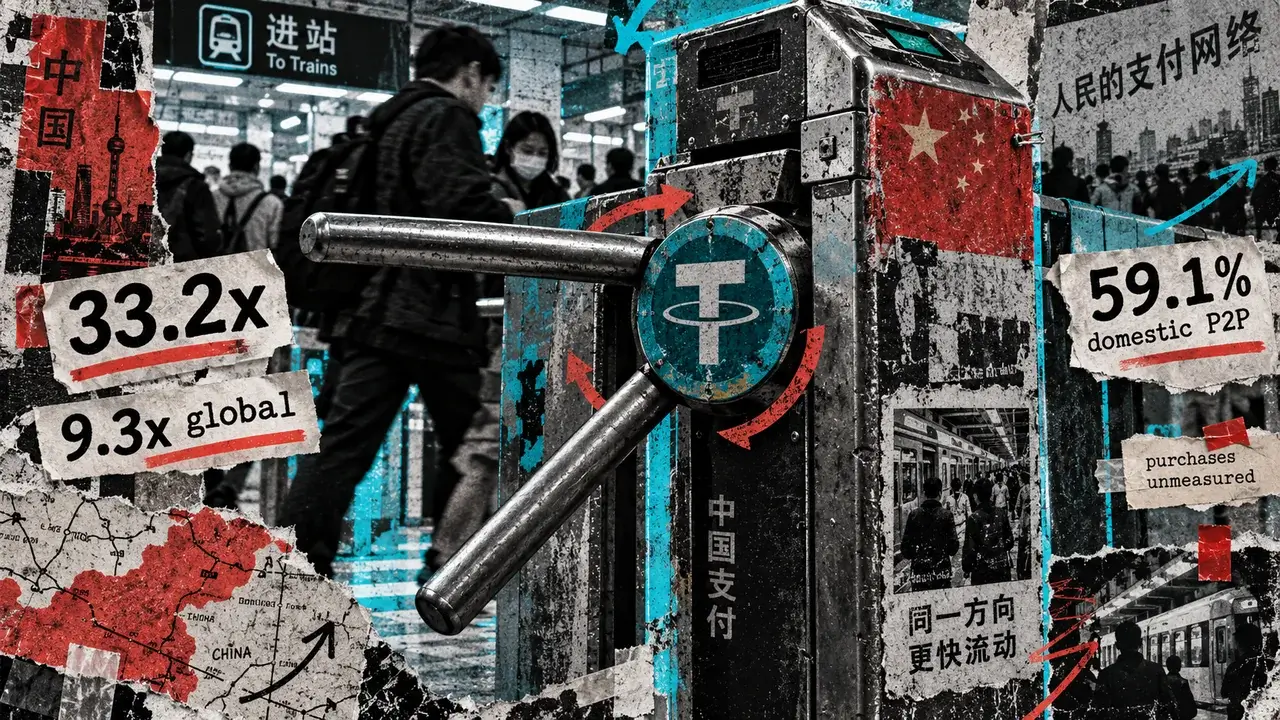
China’s underground peer-to-peer (P2P) crypto economy has surged to $176 billion between mid-2025 and mid-2026, primarily through the intensive use of stablecoins to settle transactions outside the view of the central government. Despite the high-profile ban initiated years ago, domestic traders have transitioned to sophisticated P2P networks where stablecoins are 'reused'—meaning they circulate multiple times within internal networks rather than being cashed out through regulated gateways. This high velocity of circulation allows the ecosystem to remain liquid and functional without relying on the traditional Chinese banking system.
The data reflects a significant failure in the Chinese Communist Party's (CCP) effort to fully decouple its economy from digital assets. While centralized exchanges remain blocked, the decentralized nature of P2P trading makes enforcement nearly impossible at scale. Traders are utilizing encrypted messaging apps and offshore accounts to facilitate transfers, turning stablecoins like USDT into a shadow currency for both retail speculation and cross-border trade settlements. This persistent volume suggests that the demand for non-sovereign assets in the region remains inelastic.
For US-focused investors and intelligence analysts, this $176 billion figure highlights the global resilience of stablecoin liquidity. Even in a strictly prohibited environment, the utility of dollar-pegged assets remains the primary driver of market activity. This demonstrates that regulatory bans may not decrease total volume as much as they simply push activity into less transparent, non-custodial environments. The continued dominance of these shadow markets also complicates global efforts to track anti-money laundering (AML) activities within the broader Asian region.
Looking ahead, market participants should watch for potential escalations in Beijing's technical enforcement, such as more aggressive monitoring of social media coordination or increased pressure on neighboring jurisdictions that facilitate these P2P on-ramps. Furthermore, the interplay between this $176 billion shadow economy and the official e-CNY (Digital Yuan) adoption will be a critical metric for the remainder of 2026, as the state attempts to provide a regulated alternative to the decentralized stablecoins currently dominating the underground market.