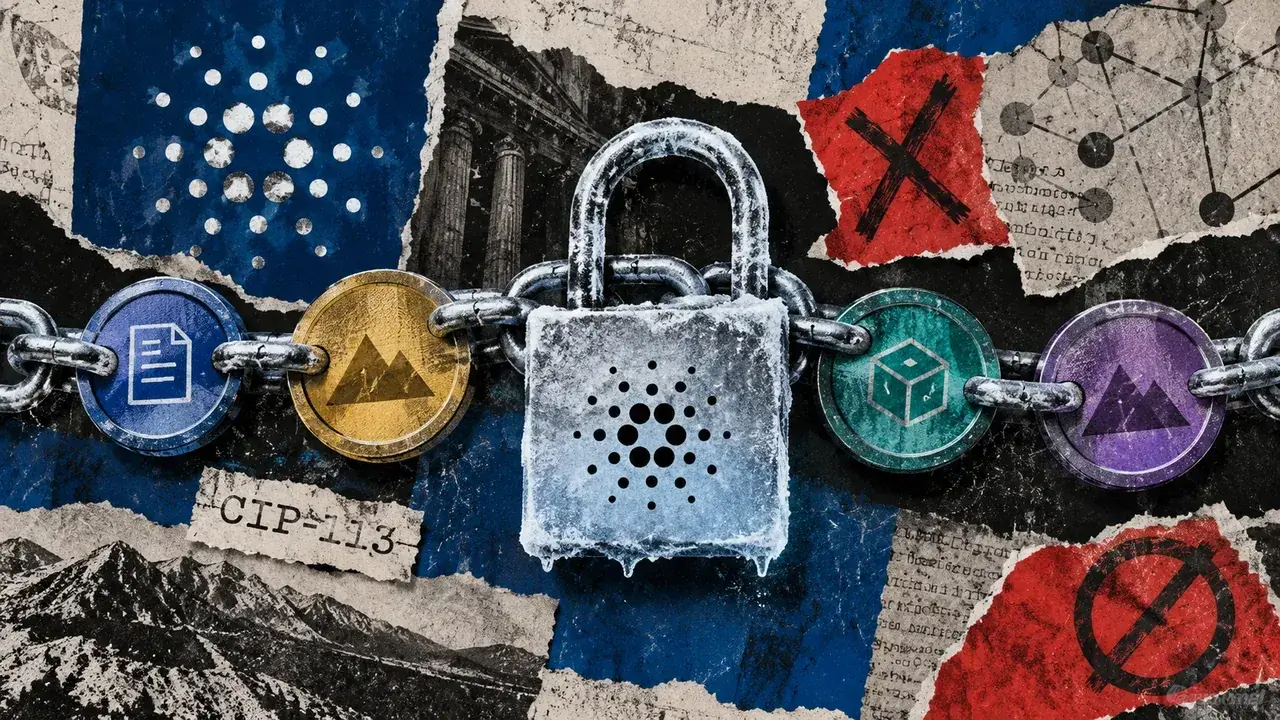
Cardano’s proposed CIP-113 standard introduces "restricted token controls" that require explicit authorization from both the token holder and a permission hook before bundled assets can be separated. This mechanism allows issuers to maintain strict oversight over how assets are transferred or liquidated, effectively bringing a traditional financial permission layer to the Cardano blockchain. By ensuring that assets cannot be unbundled without complying with specific smart contract conditions, Cardano is building a framework specifically designed to host regulated financial instruments in a programmatic environment.
This development is a direct response to the needs of Wall Street and institutional investors who require granular control to meet KYC (Know Your Customer) and AML (Anti-Money Laundering) requirements. In the 2026 market landscape, where the tokenization of Real World Assets (RWAs) has become a primary driver of blockchain utility, CIP-113 allows institutions to freeze or restrict assets at the protocol level. For firms managing private equity or debt on-chain, these safeguards provide the legal certainty necessary to transition away from legacy systems while remaining compliant with U.S. financial regulations.
However, the DeFi community views these controls with skepticism, as they challenge the core tenet of permissionless finance. If a DeFi protocol cannot automatically unbundle or liquidate a position due to a required "permission hook" from a third-party issuer, it introduces significant liquidity risks and breaks composability. Critics argue that these token controls could lead to a fragmented ecosystem where certain institutional assets are incompatible with popular decentralized exchanges and lending platforms that prioritize autonomous execution.
From a regulatory perspective, Cardano is positioning itself as a compliant alternative to more permissionless chains, potentially attracting significant capital from US-based financial institutions looking for a "safe harbor" architecture. As global regulators continue to refine their stance on digital securities throughout 2026, having built-in compliance features at the ledger level could be a significant competitive advantage. This shift signals a broader move toward a hybrid blockchain model that balances decentralization with necessary institutional gatekeeping.
Investors and developers should closely watch the upcoming governance votes regarding the final implementation of CIP-113. If passed, the next phase will be the integration of these hooks by major RWA providers and treasury management platforms. The success of this standard will depend on whether Cardano can attract high-value institutional liquidity without alienating its existing base of DeFi users who value autonomous, censorship-resistant transactions.