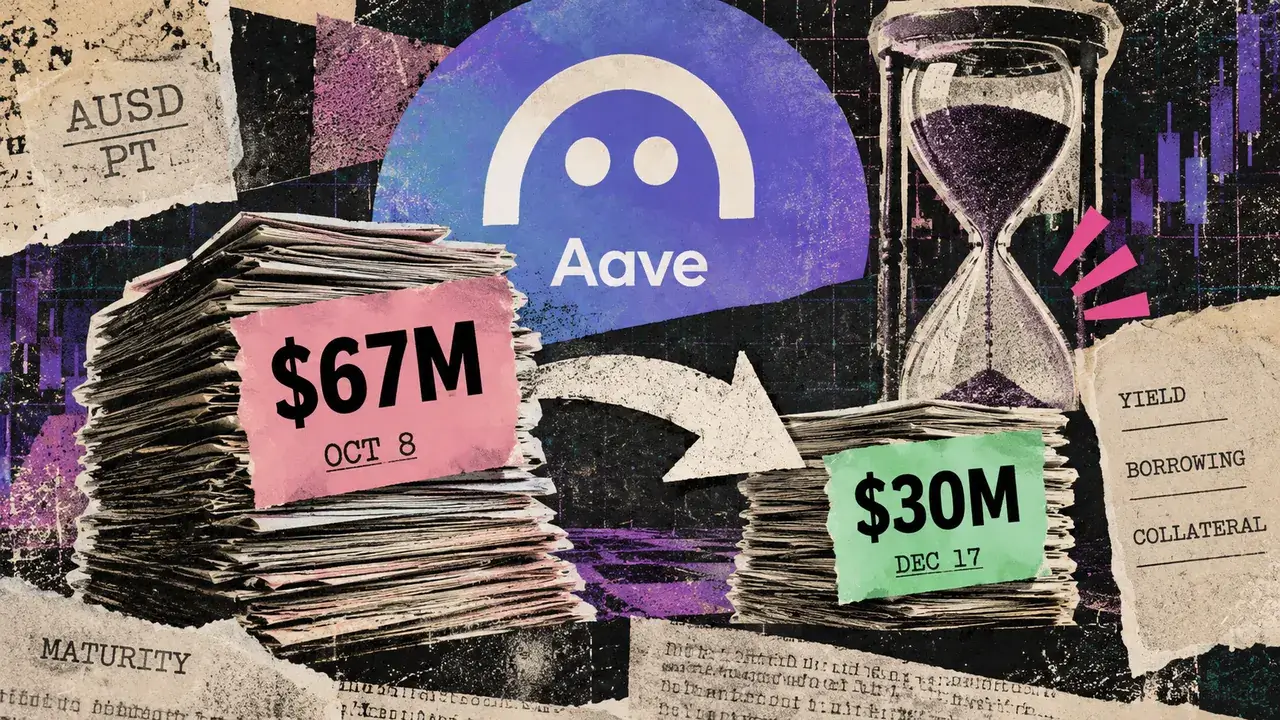
Aave and Pendle are preventing capital flight by recalibrating their integrated yield strategies to ensure that liquidity transitioning out of the October 8, 2026, term is immediately incentivized to remain within the ecosystem. Following risk assessments from LlamaRisk, the protocols are moving toward a smaller Principal Token (PT) reserve for the upcoming December cycle. This adjustment is designed to mitigate the friction caused by persistent Aave borrowing costs, ensuring that as old yield terms expire, capital is rolled into new positions rather than exiting to off-chain markets.
The strategy centers on managing the spread between Pendle’s fixed-yield tokens and Aave’s variable borrowing rates. With the October 8 deadline marking the expiration of a significant liquidity tranche, there was a growing concern that capital would exit the protocols if yields became inefficient. LlamaRisk’s recommendation to reduce December reserves reflects a tactical shift toward capital efficiency, prioritizing high-velocity liquidity over stagnant safety buffers that are currently too expensive to maintain under Aave's current rate environment.
In the U.S. market, where DeFi protocols are increasingly compared to traditional treasury management tools, this coordination represents a sophisticated attempt to mimic institutional "rollover" mechanisms. By tightening the integration between lending and yield trading, Aave and Pendle are attempting to create a "sticky" liquidity environment. This is a critical development for US-based institutional DeFi participants who require predictable yield cycles and low-slippage transitions between quarterly terms.
Market participants should closely monitor Aave’s utilization rates and Pendle’s PT discounts immediately following the October 8 expiration. The success of this retention strategy will be measured by the percentage of liquidity that migrates into the December PT contracts. If borrowing costs on Aave continue to climb despite the smaller reserve recommendation, it may signal a period of volatility for yield-sensitive investors, potentially forcing a broader repricing of DeFi interest rate swaps through the end of 2026.