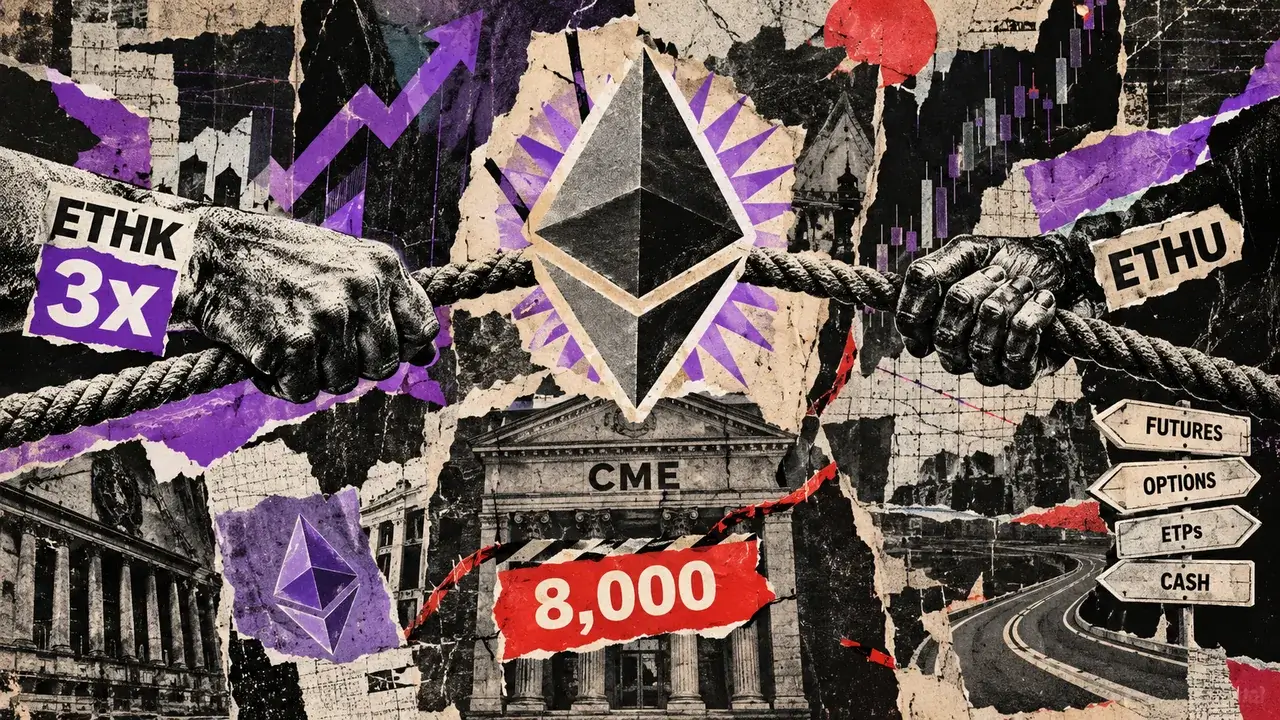
The Volatility Shares 3x Ether ETF (ETHK) is poised to reach the Chicago Mercantile Exchange (CME) futures accountability level of 8,000 contracts with as little as $362.1 million in assets under management (AUM). Due to the fund's 300% leverage target, a $362.1 million valuation translates into approximately $1.09 billion of market exposure. If this exposure is held entirely in standard CME Ether futures, it would trigger the exchange's single-month and all-month accountability thresholds, requiring the fund to provide additional justification for its position sizes.
Following the SEC’s approval of Cboe BZX’s rule change to list the product in late 2026, the market is closely watching how these leveraged instruments interact with established exchange limits. The 3x structure necessitates a heavy reliance on the CME’s Ether futures market, which, despite growing liquidity, remains subject to strict oversight. Reaching the 8,000-contract limit does not automatically cap the fund's growth, but it does invite increased regulatory scrutiny from the CME, which may ask for evidence of the fund’s ability to manage such large positions without causing market disruption.
From a market structure perspective, this highlights a potential bottleneck for institutional crypto adoption in 2026. If ETHK attracts rapid inflows, it could become a victim of its own success, potentially facing tracking errors or being forced to diversify into other derivatives if it cannot secure higher accountability levels from the CME. This situation mirrors the challenges faced by leveraged Bitcoin products in previous years, emphasizing the need for deeper liquidity in the regulated ETH futures market to accommodate high-beta investment vehicles.
Investors and analysts should monitor the AUM growth of ETHK closely once trading commences. A rapid approach to the $362 million mark could prompt Volatility Shares to seek higher position limits or lead the CME to reconsider its current thresholds for Ethereum-based products. Furthermore, the SEC's stance on this leveraged ETF suggests a continued willingness to allow complex crypto-linked products to trade on national exchanges, provided they adhere to the existing framework of the Commodity Exchange Act.