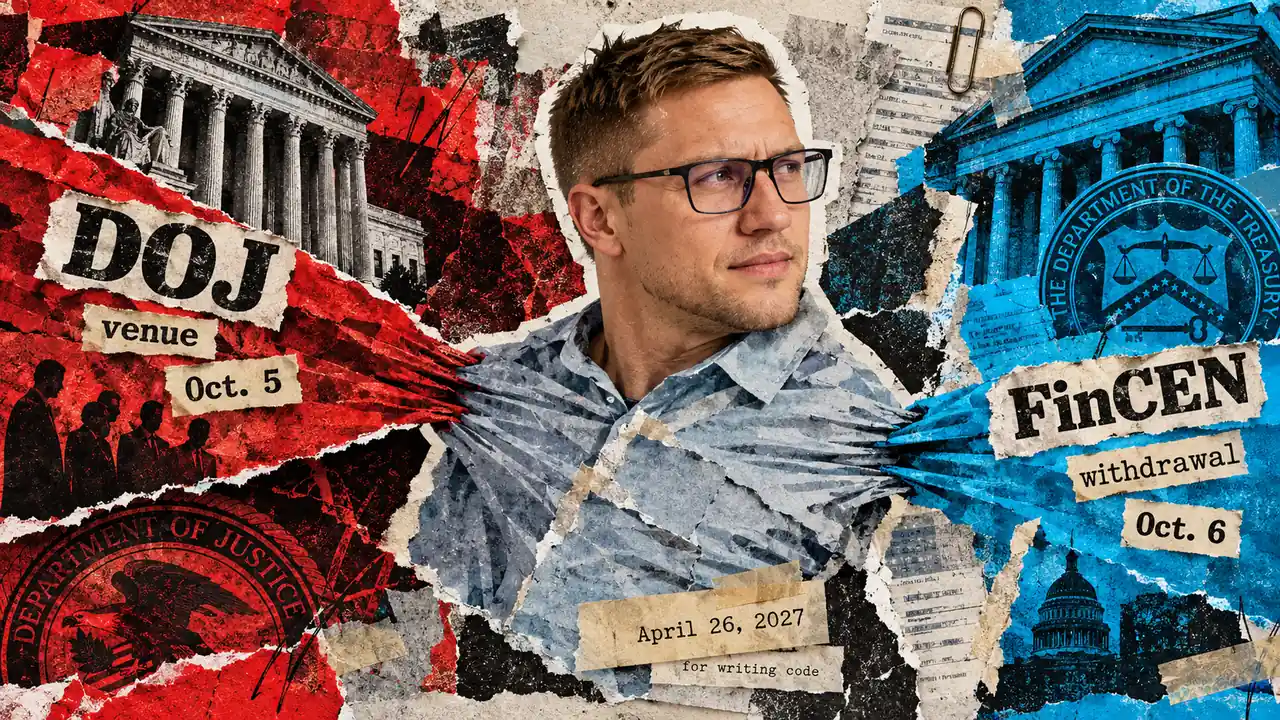
The DOJ is pressing forward with the Tornado Cash prosecution because it believes that the Bitcoin Fog appeal establishes a firm legal basis for criminal liability in the operation of crypto mixers, irrespective of their technical decentralization. In a filing dated October 5, 2026, the DOJ argued that narrower privacy policies implemented by developers do not negate their responsibility for facilitating illicit financial flows. This stance effectively decouples specific criminal cases from the Treasury’s recent decision to drop mandatory reporting plans for all mixer transactions, proving that the government is shifting from broad oversight to aggressive litigation.
This legal development comes as a surprise to many in the DeFi sector who expected a reprieve following the Treasury's pivot. By citing the Bitcoin Fog case—a custodial mixing service—prosecutors are attempting to bridge the legal gap between traditional money laundering and non-custodial smart contracts. The DOJ's strategy aims to prove that the developers of Tornado Cash maintained sufficient control over the protocol's impact to be held accountable for the billions in stolen funds routed through the platform by state-sponsored actors.
The broader regulatory context suggests a 'pincer movement' in US crypto policy for 2026: the Treasury is reducing the compliance burden for legitimate privacy-preserving tools to foster innovation, while the DOJ is concurrently setting high-profile examples of protocols that cross the line into criminal facilitation. This bifurcated approach highlights a growing distinction between 'compliant privacy' and 'anonymity at all costs,' a distinction that will likely define the next two years of American DeFi regulation.
Investors and developers should watch for the court's response to the DOJ’s venue filing, as it will determine whether decentralized code can be legally categorized as a 'financial institution.' A ruling in favor of the DOJ would likely trigger a mass exit of privacy-focused developers from the US jurisdiction. Conversely, if the defense successfully argues that Bitcoin Fog is not an applicable precedent for non-custodial software, it could provide a landmark victory for the preservation of open-source financial tools in the United States.