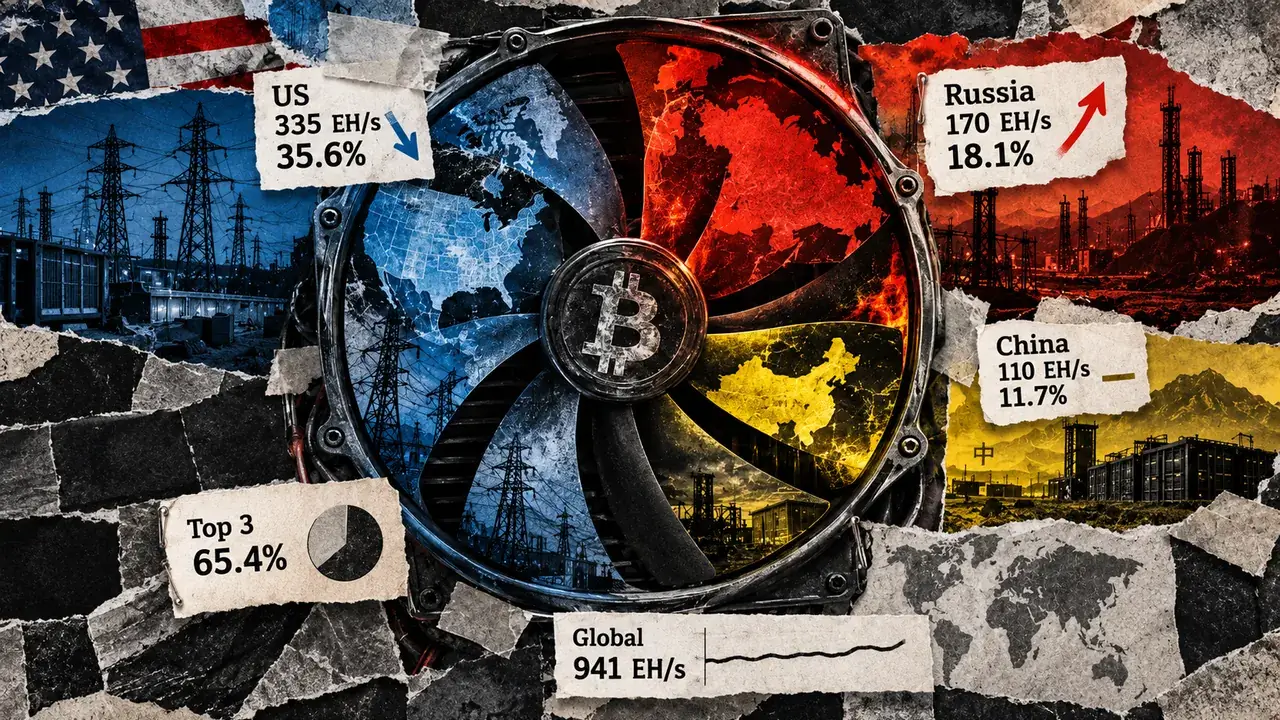
According to the October 2026 Hashrate Index report, the global Bitcoin mining landscape remains highly concentrated, with the United States, China, and Russia accounting for approximately 66% of the total network power. While the U.S. continues to lead the pack due to mature institutional infrastructure, China’s share has proven resilient despite regulatory shifts, and Russia remains a dominant force leveraging low-cost energy in northern regions. The report identifies Ethiopia as the primary 'rival' gaining ground, fueled by a surge in large-scale hydroelectric mining operations that have come online throughout 2026.
This geographical concentration persists despite the Bitcoin network’s decentralized design, raising concerns about geopolitical influence over transaction processing. The dominance of these three nations means that domestic policy changes in Washington, Beijing, or Moscow can have outsized effects on the global network's security and hash price. However, the rise of Ethiopia marks a significant shift, as the Horn of Africa becomes a new hub for miners seeking political neutrality and renewable energy sources outside of the traditional mining powerhouses.
From a regulatory standpoint, US-based miners are currently navigating tighter environmental disclosures and energy-use taxes introduced in early 2026. This has created an opening for emerging markets like Ethiopia and the UAE to attract capital by offering long-term energy stability and favorable tax exemptions. For investors, this shift indicates a potential migration of hashrate toward the Global South, which could eventually dilute the current 66% concentration held by the top three countries.
Market participants should watch for upcoming energy policy updates in the U.S. and Russia, as well as the progress of Ethiopia’s infrastructure expansion. If the current trend continues, the dominance of the 'Big Three' may fall below the 60% threshold by mid-2027, leading to a more geographically distributed and resilient network. For now, the concentration remains a key metric for assessing the censorship resistance and physical security of the Bitcoin network.