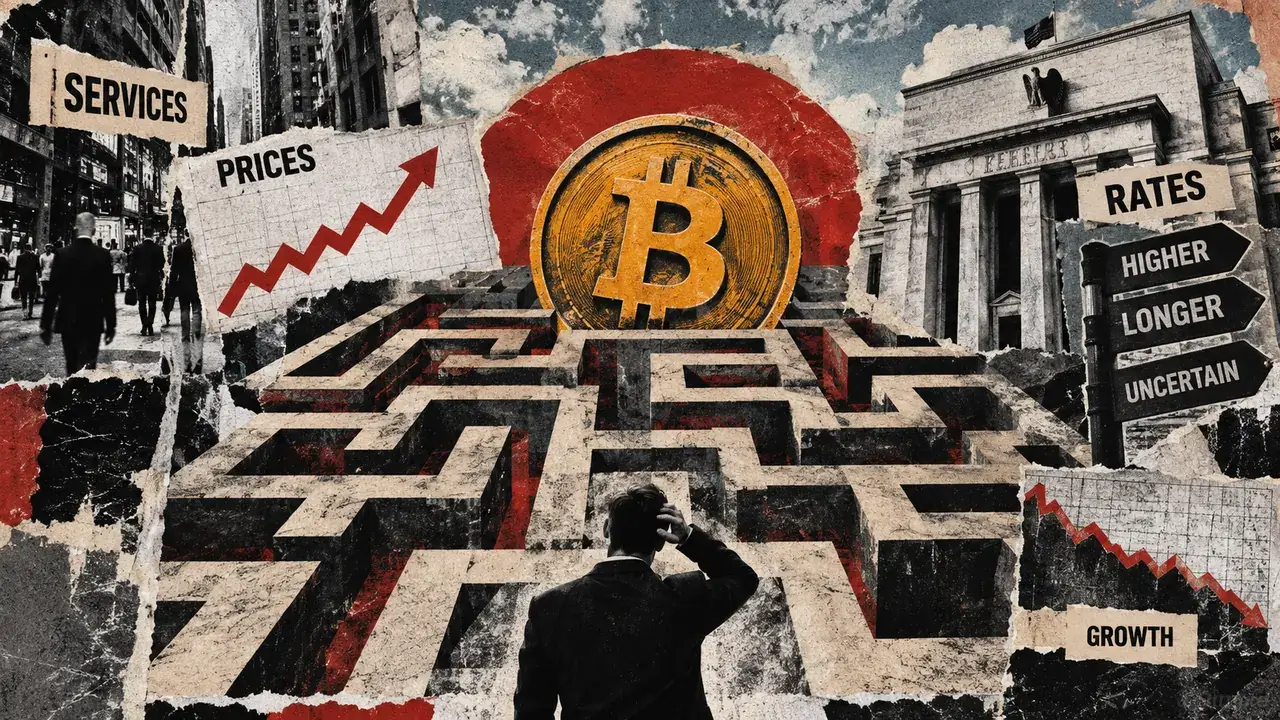
The spike in the US services prices index to 74.0 in September 2026 directly dampens expectations for Federal Reserve rate relief, suggesting that Bitcoin’s anticipated Q4 rally may face significant headwinds. As service-sector inflation reaches a four-year peak, the Fed is unlikely to pivot toward lower interest rates, even as general economic growth begins to slow. For Bitcoin, which thrives on liquidity and low borrowing costs, this 'higher-for-longer' interest rate environment creates a bearish backdrop for both spot prices and leveraged derivatives.
The jump to 74.0 indicates that input costs for service-based businesses—ranging from healthcare to hospitality—are rising at a pace not seen since the post-pandemic recovery. This specific economic data point is crucial because the service sector represents the largest portion of the US economy. When services inflation remains sticky, the Federal Reserve typically maintains a restrictive monetary policy to prevent a secondary inflation spiral, which reduces the capital flow into speculative markets like cryptocurrency.
From a market perspective, this shift in sentiment is already impacting leveraged Bitcoin exposure. Traders who were positioned for a 'dovish' Fed pivot are now facing increased costs to maintain their positions, leading to potential liquidations. The stagflationary signal—rising prices paired with slowing growth—leaves the crypto market in a state of uncertainty, as Bitcoin’s traditional narrative as a hedge against inflation is being tested by the reality of tightened US dollar liquidity.
Investors should now shift their focus to upcoming labor market data and the next Consumer Price Index (CPI) release to determine if this service-sector spike is an isolated incident or part of a broader trend. If inflation remains entrenched above the Fed’s target, Bitcoin may struggle to break past key resistance levels, potentially leading to a period of consolidation or further downside as the market recalibrates for a lack of rate relief through the end of 2026.