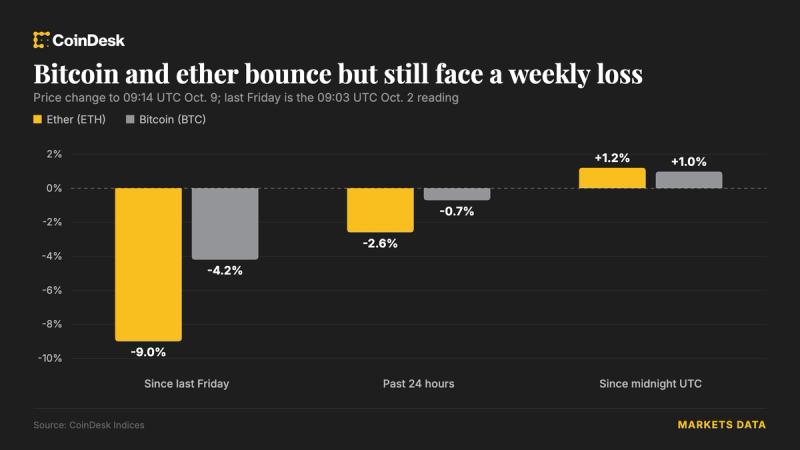
Bitcoin (BTC) recovered to the $82,500 level after President Trump explicitly ruled out a military strike against Iran in the lead-up to the 2026 midterm elections. The announcement provided a necessary reprieve for crypto markets, which had been under significant pressure due to escalating regional tensions and the resulting 'risk-off' sentiment among institutional investors. While the news stopped the immediate bleeding, the market remains cautious, with Bitcoin still down 4% over the last seven days.
The volatility observed this week highlights the sensitivity of digital assets to US foreign policy during an election year. Ethereum (ETH) faced even sharper liquidations than Bitcoin, losing 9% of its value as investors rotated out of high-beta altcoins. The administration's pivot toward diplomatic restraint appears aimed at stabilizing global energy markets and domestic inflation before voters head to the polls, a move that crypto analysts view as a temporary floor for the market.
For US-focused traders, this event underscores the 'election trade' narrative of 2026. As the Trump administration prioritizes economic optics before the midterms, the likelihood of major military disruptions may remain low, potentially allowing Bitcoin to consolidate between the $80,000 and $85,000 range. However, the relative weakness in Ethereum suggests that capital is not yet flowing back into the broader DeFi ecosystem, as regulatory uncertainty continues to weigh on smart-contract platforms.
Readers should watch for further statements from the White House regarding Middle East trade routes and potential sanctions. If the de-escalation holds, the next technical resistance for Bitcoin sits at $86,000. Conversely, if midterm political rhetoric shifts back toward aggressive trade or military posturing, the $80,000 support level will be the critical zone to defend to prevent a broader market correction.