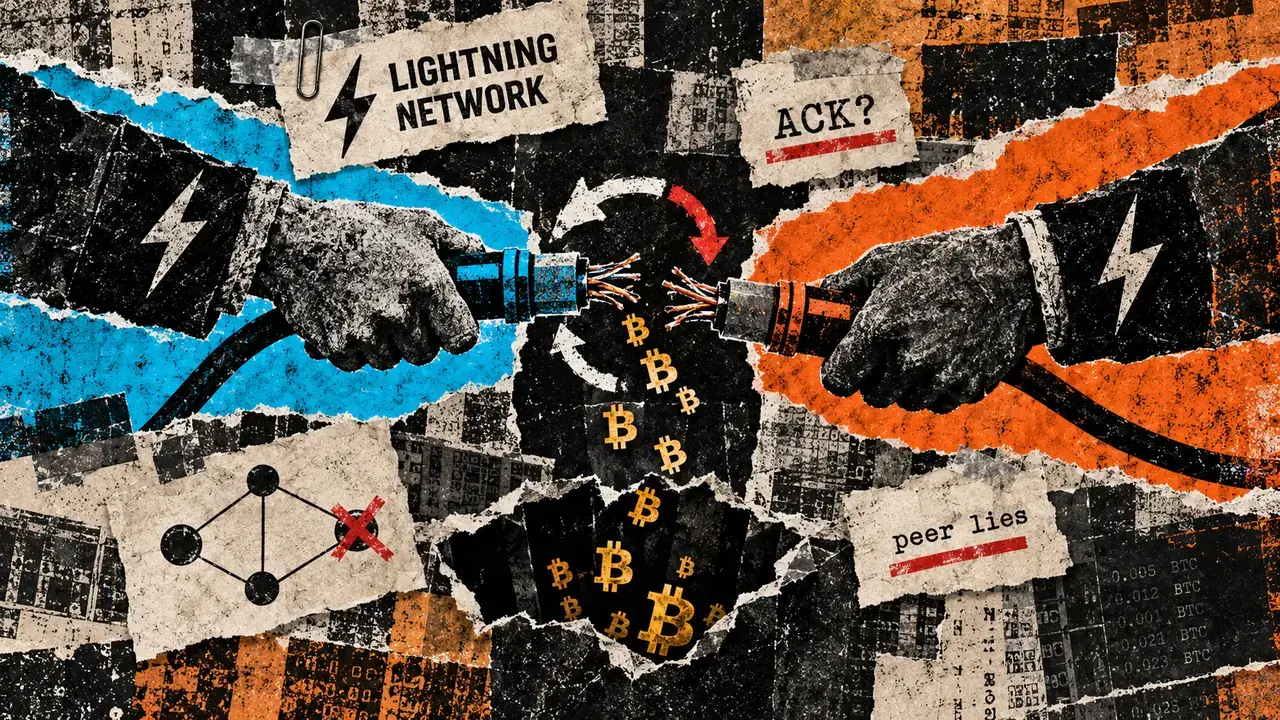
Lightning Development Kit (LDK) users must update to versions v0.2.7 or v0.1.13 to patch a critical security flaw known as a 'reconnect lie.' This vulnerability permitted attackers to induce a state mismatch when a node reconnected to the network, potentially leading to the unauthorized withdrawal of Bitcoin from payment channels. By implementing these updates, LDK-based applications can now verify channel states more securely, preventing peers from broadcasting fraudulent transaction histories to claim funds that do not belong to them.
The vulnerability primarily affected light clients and mobile Lightning wallets that rely on LDK for peer-to-peer channel management. The 'reconnect lie' exploit occurred when a malicious peer provided deceptive data about the last agreed-upon state of a channel during the handshake process. If the LDK-based app accepted this false state, it could inadvertently sign off on an outdated ledger entry, allowing the attacker to drain the channel's liquidity. The October 1, 2026, release specifically hardens the state machine logic to reject these fraudulent synchronization attempts.
In addition to the reconnection fix, the v0.2.7 update addresses a secondary but significant flaw within the LSPS2 (Lightning Service Provider Standard) implementation. This flaw involved a payment-amount discrepancy where an intermediary or service provider could manipulate the perceived value of a transaction. As US-based developers continue to integrate LSPS standards to improve the user experience of onboarding to the Lightning Network, fixing these amount-spoofing bugs is essential for maintaining the integrity of decentralized retail payments.
From a regulatory and market perspective, this proactive patch is a double-edged sword. While it demonstrates the resilience and rapid response of the Bitcoin open-source community, it also highlights the inherent technical risks of Layer-2 scaling. With the US Treasury closely monitoring the security of non-custodial crypto tools in 2026, protocol-level vulnerabilities like these are often cited in arguments for more stringent software audits. However, the lack of reported exploits prior to the patch suggests that the risk was mitigated before it could impact broader market sentiment.
Investors and developers should watch for the update cycle of major LDK-integrated wallets over the coming weeks. A swift transition to the patched versions will secure the network's liquidity, while any delay in adoption could leave specific nodes vulnerable to targeted 'reconnect lie' attacks. The industry is also expected to move toward more rigorous testing of LSPS implementations to prevent similar payment-logic errors in the future.