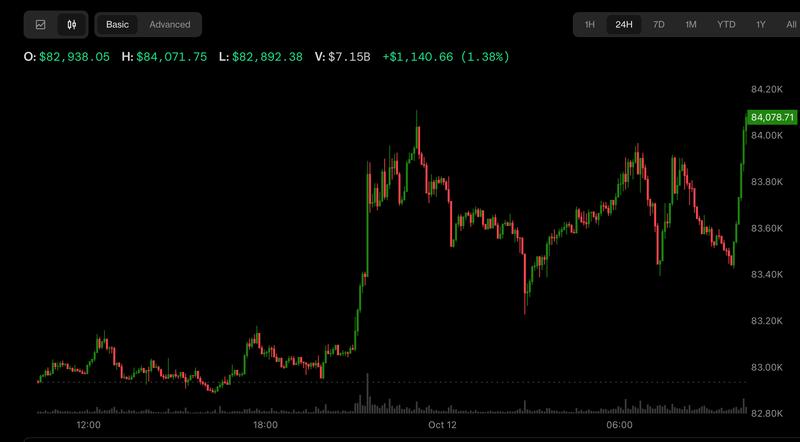
Bitcoin is maintaining its position above the $84,000 mark because market participants are prioritizing broader macroeconomic indicators, specifically a downturn in oil prices, over the $600 million in capital that exited spot Bitcoin ETFs last week. While large-scale outflows typically signal a bearish shift in institutional sentiment, the current price stability indicates that retail demand or sovereign accumulation is effectively absorbing the supply. The decoupling of price action from ETF flow data suggests a maturing market that is less dependent on daily Wall Street inflows for price discovery.
The $600 million in net outflows marks one of the more significant weekly retreats for US-listed spot Bitcoin ETFs in 2026. However, the fact that BTC has shrugged off this selling pressure to hold its weekend gains highlights a shift in market psychology. Investors appear to be looking past the immediate institutional rotation, focusing instead on the global liquidity environment which often improves when energy costs decline.
Falling oil prices are playing a pivotal role in this resilience. As energy costs drop, inflationary pressures typically ease, giving the Federal Reserve more room to maintain or pivot toward a more accommodative monetary policy. In the 2026 market landscape, Bitcoin continues to act as a primary beneficiary of 'risk-on' sentiment triggered by lower energy prices, as it reduces the perceived necessity for restrictive interest rates that usually dampen crypto valuations.
For US-based traders, the key factor to watch next is whether the $84,000 level can hold as a permanent floor if ETF outflows persist into a second week. While the current shrug-off is bullish, a prolonged lack of institutional buying could eventually test the conviction of swing traders. Additionally, if oil prices rebound sharply, the current tailwind for Bitcoin could vanish, potentially leading to a retest of lower support levels near $80,000.