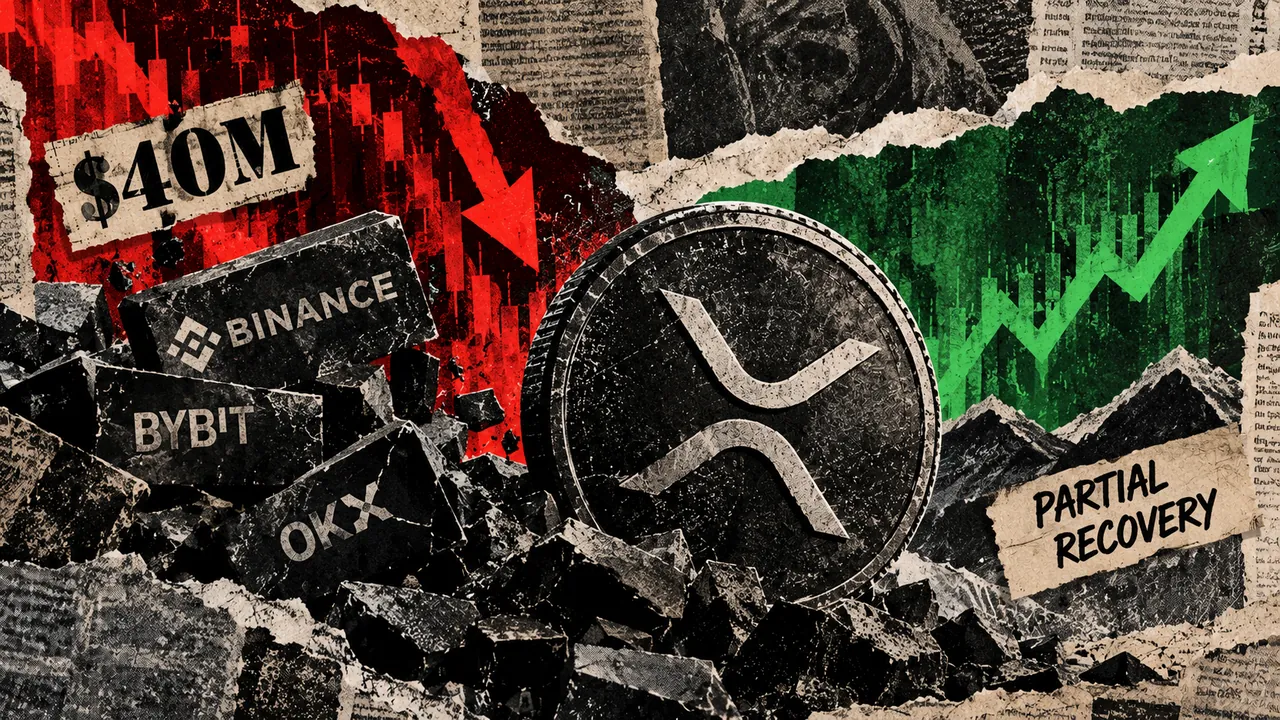
XRP secured a significant price rebound in early 2026 primarily because the market reached a point of 'seller exhaustion' following a sampled liquidation wave on XRPL.to. When these forced liquidations concluded, the immediate downward pressure on the token vanished, allowing the price to bounce back even as spot trading volume on Binance plummeted by nearly 80%. This divergence suggests that the recovery was not driven by a flood of new retail spot buyers, but rather by the stabilization of existing positions and a reduction in active sell orders.
The decline in Binance spot turnover reflects a broader trend of cautious participation among US-focused retail traders during periods of high volatility. While spot activity stalled, data shows that exposure on major derivative platforms, including Bybit and Binance’s futures desks, began to climb back to pre-liquidation levels. This return of leverage indicates that institutional and professional traders are reclaiming their positions, betting that the bottom has been established for the current cycle.
From a market structure perspective, the 80% drop in turnover during a price increase is often a sign of 'thin' liquidity. In the current 2026 regulatory environment, where US-based entities are under stricter oversight regarding market manipulation, this low-volume recovery will be closely watched by analysts. If the price continues to rise without a corresponding increase in spot volume, XRP could face a sharp rejection if a large sell order hits the books, as there is currently less 'depth' to absorb significant trades.
Looking ahead, investors should monitor whether spot volume returns to Binance and other major US-accessible exchanges to confirm the validity of this move. A sustained rally typically requires the backing of spot accumulation rather than just derivative-led short covering. Additionally, the broader geopolitical climate in 2026 remains sensitive to liquidity shifts, making the re-entry of Bybit and Binance exposure a key indicator for XRP’s near-term volatility.