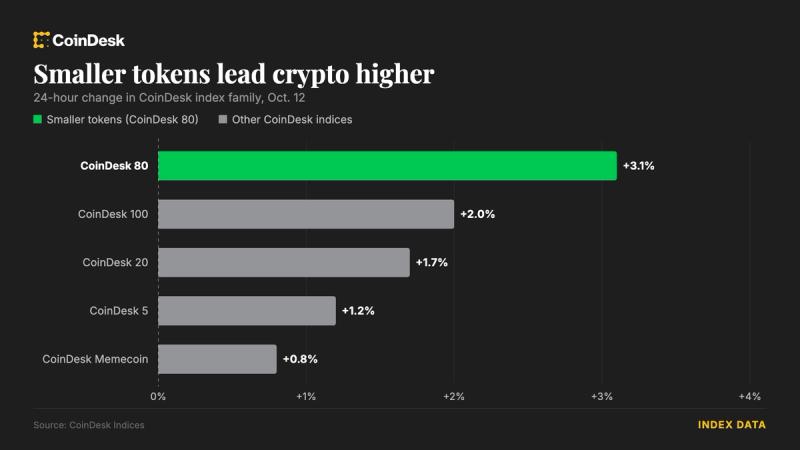
In the current market environment of 2026, altcoins are outperforming Bitcoin because lower liquidity and thin trading volumes are magnifying price gains for smaller-cap assets. While the CoinDesk 80 index has surged approximately 3% over the last 24 hours, the CoinDesk 5—which tracks the largest assets—has seen only half that growth. This indicates that while the broader market is active, the buying pressure is concentrated in higher-beta assets rather than the market leaders.
This shift occurs against a backdrop of significant institutional selling pressure. Last week, spot Bitcoin ETFs in the United States recorded net outflows totaling $681 million, a move that has effectively stalled Bitcoin’s momentum. As a result, Bitcoin has struggled to maintain its footing above the $83,500 level, creating a vacuum that retail traders and automated systems are filling by rotating capital into mid-cap and small-cap altcoins.
For US investors, this market structure suggests a transition from institutional-led growth to a more fragmented, speculative environment. The 'thin trading' mentioned by analysts implies that even modest buy orders can drive significant percentage gains in the CoinDesk 80, but it also warns of potential volatility if sell-side pressure returns to these less liquid markets. The decoupling of altcoin performance from Bitcoin ETF flows highlights a maturing market where different sectors are beginning to react to distinct liquidity triggers.
Moving forward, market participants should watch the $83,500 Bitcoin resistance level and the next set of ETF flow data. If Bitcoin fails to reclaim its upward trajectory and ETF outflows persist, the current altcoin rally may face a liquidity crunch. Additionally, any upcoming regulatory clarity regarding altcoin classification in the US could either solidify these gains or trigger a rapid reversal in the currently outperforming mid-cap sector.