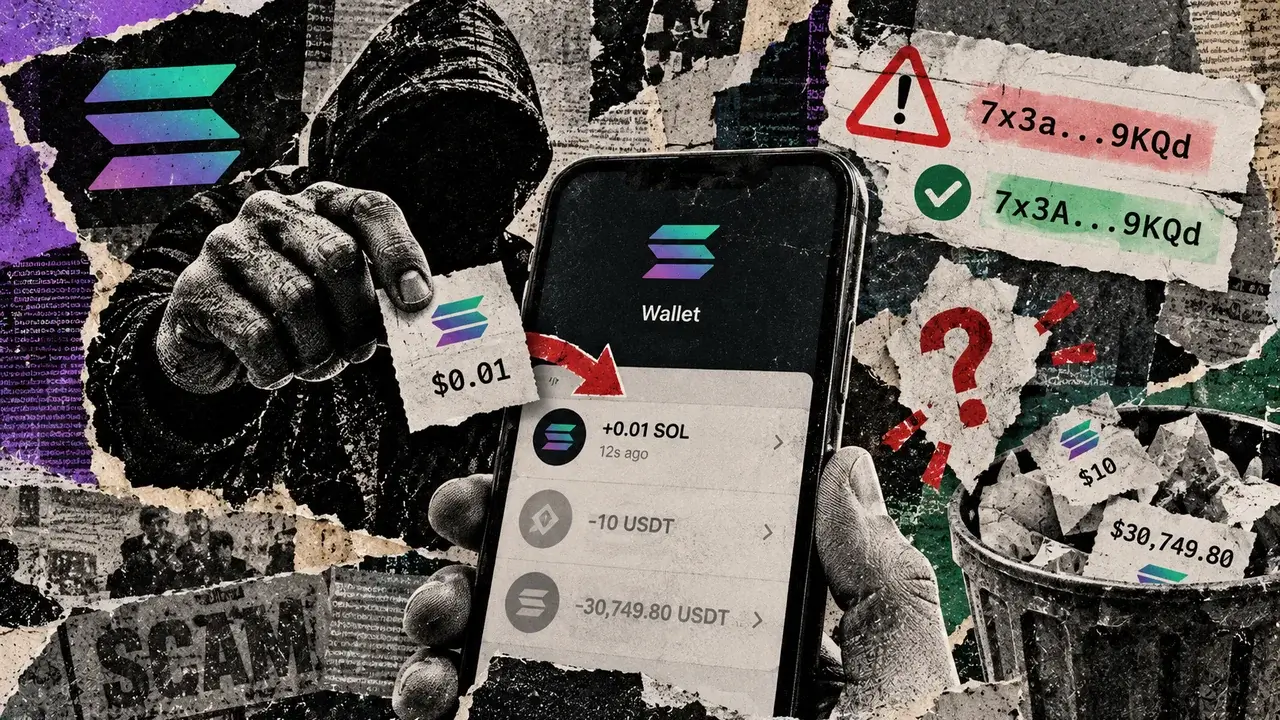
A Solana wallet holder recently lost $30,750 to an address poisoning scam despite performing a successful $10 test transaction. According to research from Bitquery, the user successfully sent a small amount to a legitimate recipient, but when it came time to send the larger sum, they inadvertently copied a 'poisoned' address from their recent transaction history. This fraudulent address was generated by an attacker to mimic the first and last characters of the user's intended destination, a tactic known as address spoofing or poisoning.
The mechanics of this 2026 exploit involve scammers monitoring the blockchain for high-volume activity and immediately sending 'dust' (negligible amounts of SOL or tokens) from a vanity address that looks nearly identical to the user's frequent contacts. In this specific case, the scammer's address appeared at the top of the user’s transaction list immediately after the test transfer. The victim, assuming the most recent entry was their verified recipient, copied the attacker’s address for the $30,750 transfer, resulting in a total loss of funds.
This event highlights a growing security gap in the Solana ecosystem as high-speed, low-fee environments allow attackers to automate poisoning attempts at scale. While US-based crypto intelligence firms have warned about these tactics for years, the ability of scammers to bypass the 'test transaction' safety net suggests that wallet UI/UX must evolve. Industry experts are now calling for Solana wallet providers like Phantom and Solflare to implement more aggressive filtering for zero-value or unsolicited transfers that clutter transaction histories.
For investors and DeFi participants, this incident serves as a critical reminder that visual verification of the first and last four digits of an address is no longer sufficient. As we move through 2026, the market is shifting toward the use of verified Address Books and ENS-style naming services to mitigate human error. Readers should watch for upcoming wallet security updates and potential regulatory discussions regarding the liability of non-custodial interfaces in preventing predictable spoofing attacks.