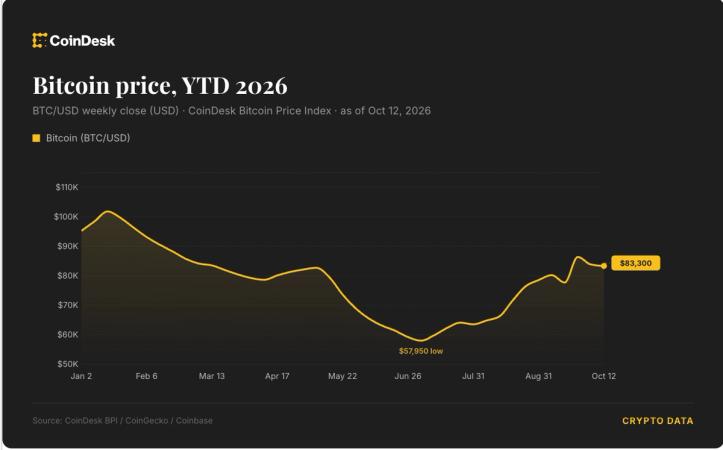
Bitcoin continues to trade firmly at the $83,000 mark as of early 2026, defying the traditional inverse relationship with a strengthening U.S. dollar and climbing bond yields. This price stability is largely driven by a shift in market psychology where investors are prioritizing Bitcoin’s fixed supply over the temporary yield gains found in the debt market. While a firm dollar usually signals a 'risk-off' environment that hurts crypto, the current support level suggests that institutional buyers are successfully absorbing sell-side pressure.
Adding to this bullish sentiment is the strategic evolution of the mining sector. IREN (formerly Iris Energy) recently announced a landmark multiyear cloud services deal with AI firm Anthropic, signaling a new era where Bitcoin infrastructure providers diversify into high-performance computing (HPC). By securing non-volatile revenue streams through AI partnerships, miners are becoming less forced to sell their BTC holdings to cover operational costs, effectively reducing market-wide sell pressure during macro turbulence.
The geopolitical and regulatory backdrop in 2026 has further cemented this trend. As U.S. bond yields rise in response to persistent fiscal deficit concerns, global capital is bifurcating: moving into both the safety of the dollar and the censorship-resistant liquidity of Bitcoin. This 'dual-hedge' strategy has allowed BTC to remain steady even as gold experiences similar consolidation, reflecting a broader market acceptance of digital assets within a diversified portfolio.
Investors should now watch the $85,000 resistance zone. If Bitcoin can flip this level while the U.S. Dollar Index (DXY) remains elevated, it will confirm a structural decoupling from legacy finance correlations. Additionally, keep a close eye on further AI-compute partnerships from other major mining firms, as these deals are providing the fundamental utility and cash flow needed to sustain Bitcoin’s valuation at these historic highs.