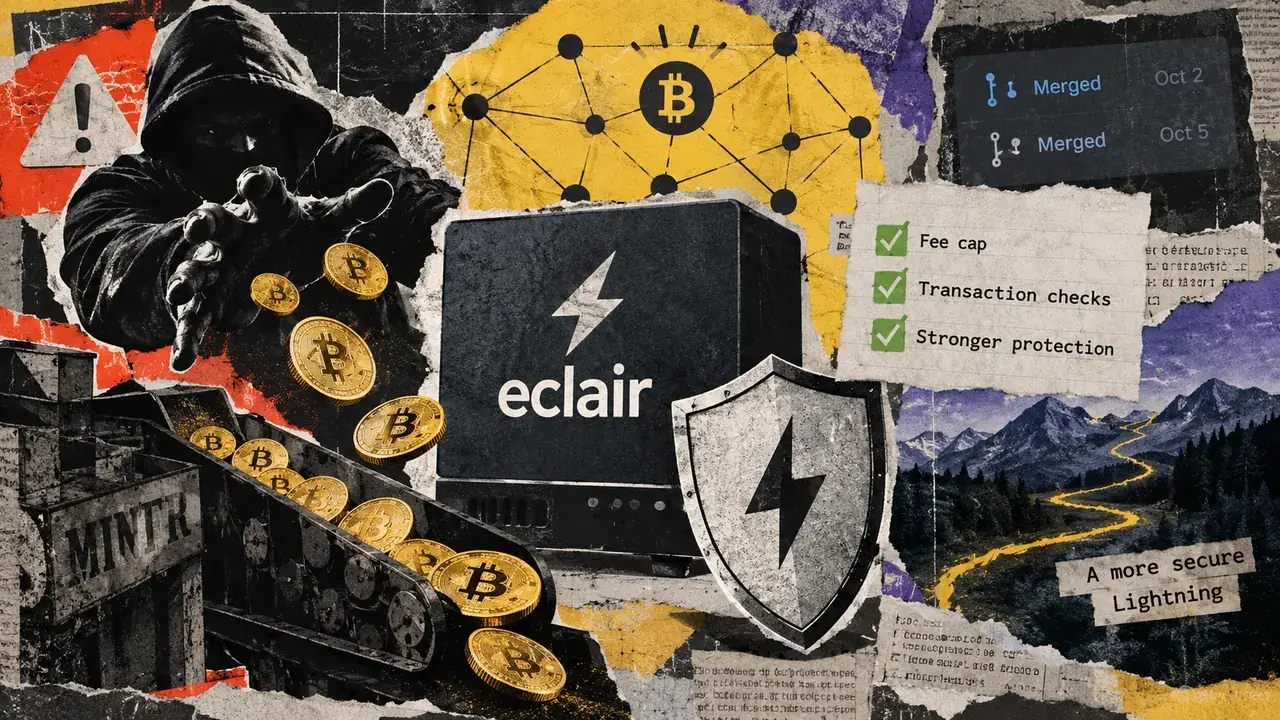
The latest October 2026 code merge for Eclair, a leading Bitcoin Lightning Network implementation by ACINQ, specifically targets flaws in the funding and splicing protocols. These fixes prevent scenarios where misconfigured or malicious peers could force a node operator to pay exorbitant on-chain fees, effectively "burning" Bitcoin during channel adjustments. By tightening the verification of backend transactions and limiting the fees peers can suggest, Eclair ensures that Lightning remains a cost-effective scaling solution.
Technically, the update focuses on the "splicing" feature, which allows users to resize their Lightning channels without closing them. Previous iterations contained gaps that could be exploited to inflate transaction costs during the liquidity rebalancing process. The new code ensures that every splice-in or splice-out operation is verified against a strict set of fee-rate parameters, protecting the node operator's wallet from unexpected drains caused by network congestion or protocol errors.
For US-based node operators and businesses using Lightning for point-of-sale transactions, this update represents a significant reduction in operational risk. As the Bitcoin network sees increased demand for block space in late 2026, the ability to manage Layer 2 liquidity without overpaying for Layer 1 security is vital. These technical refinements help maintain Bitcoin's competitive edge against centralized payment processors by lowering the total cost of ownership for decentralized infrastructure.
Investors and developers should watch for the transition of these merged fixes into a stable release following the current v0.14.3 version. Furthermore, the industry is looking to see if other major implementations, such as LND and Core Lightning, will adopt similar fee-protection logic to ensure network-wide standardizations. Ensuring that Lightning remains cheap and secure is a primary catalyst for the continued institutional adoption of Bitcoin as a medium of exchange.