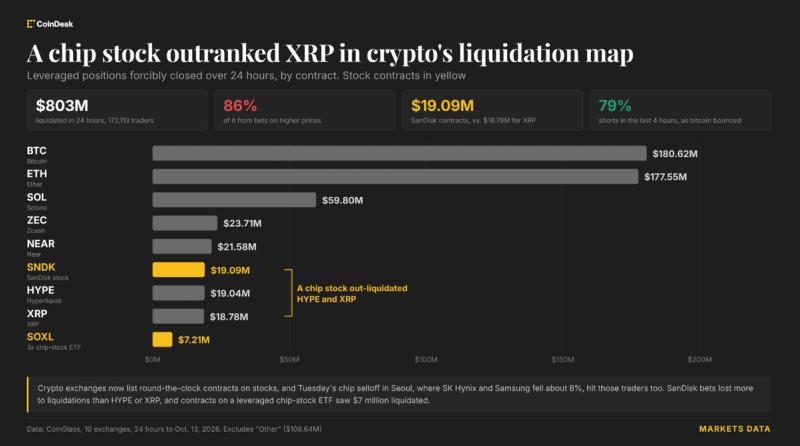
Tokenized SanDisk positions saw a higher volume of liquidations than XRP because a localized crash in the Asian semiconductor industry triggered a massive sell-off in synthetic tech assets. As chip-related stocks plummeted in early 2026, leveraged bullish traders on crypto exchanges were caught in an $800 million liquidation wave, with 86% of those losses stemming from long positions. This shift indicates that tokenized derivatives of traditional equities are now capable of generating more systemic volatility than established high-cap cryptocurrencies during sector-specific shocks.
The rout originated in Asian manufacturing hubs, where geopolitical tensions and supply chain bottlenecks led to a sudden revaluation of semiconductor giants. Because these assets are traded 24/7 as tokenized contracts on major crypto platforms, the volatility bypassed traditional market closing hours, leading to cascading margin calls. US-focused traders holding these synthetic instruments found themselves exposed to overnight risks that far outweighed the price action seen in major digital assets like XRP during the same window.
This event underscores a significant evolution in the 2026 market landscape, where crypto liquidity is increasingly tied to the performance of traditional NASDAQ-listed entities. The fact that a tokenized stock could outpace a top-ten cryptocurrency in liquidations suggests that speculative capital is shifting toward these hybrid instruments, making the broader crypto market more sensitive to non-crypto economic data. It represents a maturation of the DeFi and synthetic asset space, albeit one that carries significant risk for retail participants using high leverage.
Moving forward, investors should closely monitor the correlation between tokenized chip stocks and broader market sentiment. Regulatory bodies in the US, including the SEC, are likely to view this $800 million wipeout as a catalyst for stricter oversight of synthetic stock offerings. Traders should watch for the next round of Asian manufacturing data and its immediate impact on crypto-exchange-listed derivatives to gauge if this decoupling from standard crypto trends will persist throughout the year.