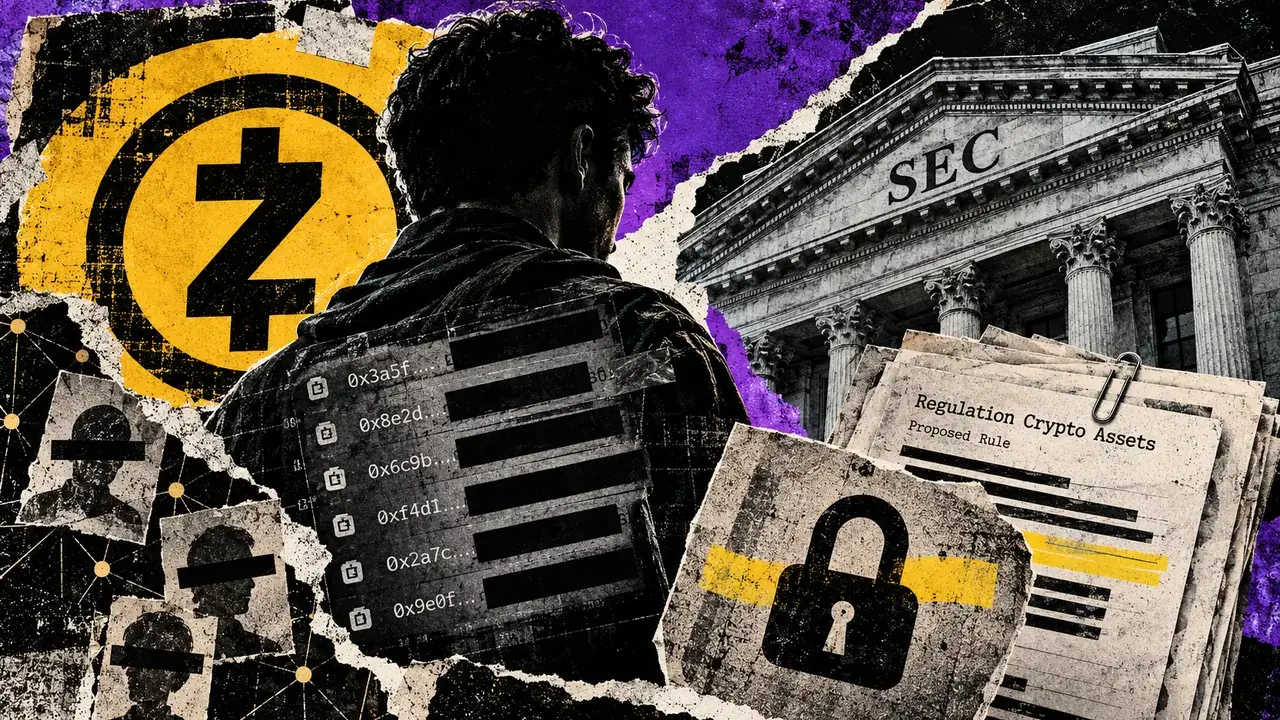
The Zcash policy group has formally requested that the U.S. Securities and Exchange Commission (SEC) refine its proposed 2026 fundraising regime to protect the privacy of unrelated wallet activities. The group argues that the current proposal, which requires extensive public wallet logs, inadvertently exposes the private financial histories of founders and early contributors that are not relevant to material disclosures or conflicts of interest. By demanding a fix, the group seeks to ensure that regulatory transparency does not become a tool for unnecessary surveillance of personal financial data.
The dispute centers on how digital asset transparency should function in a strictly regulated environment. While the SEC aims to prevent fraud by ensuring "material holdings" are disclosed to the public, the Zcash group points out that the transparent nature of many blockchain logs can link unrelated personal transactions to professional disclosures. Advocates are pushing for the adoption of data-minimization techniques or zero-knowledge proof integrations that would allow for regulatory compliance without sacrificing the individual financial sovereignty that Zcash was designed to protect.
This pushback comes as the SEC ramps up its oversight of privacy-centric protocols throughout early 2026. U.S. regulators have historically been skeptical of anonymity-enhanced cryptocurrencies, but the Zcash group’s specific focus on the legal definition of "materiality" suggests a strategic middle ground. They are not requesting total opacity from the government, but rather a distinction between what a regulator needs to see to protect investors and what the general public can scrape from a founder's private wallet history.
For ZEC investors and the broader privacy sector, this development is a critical test of how privacy coins will survive in a compliant U.S. market. If the SEC adopts these recommendations, it could set a precedent for other privacy-focused assets to engage with federal regulators without being forced into total transparency. Readers should watch for the SEC’s final ruling on the fundraising framework in the coming months, as any mandate for full wallet history exposure could lead to increased legal friction for U.S.-based developers and projects.