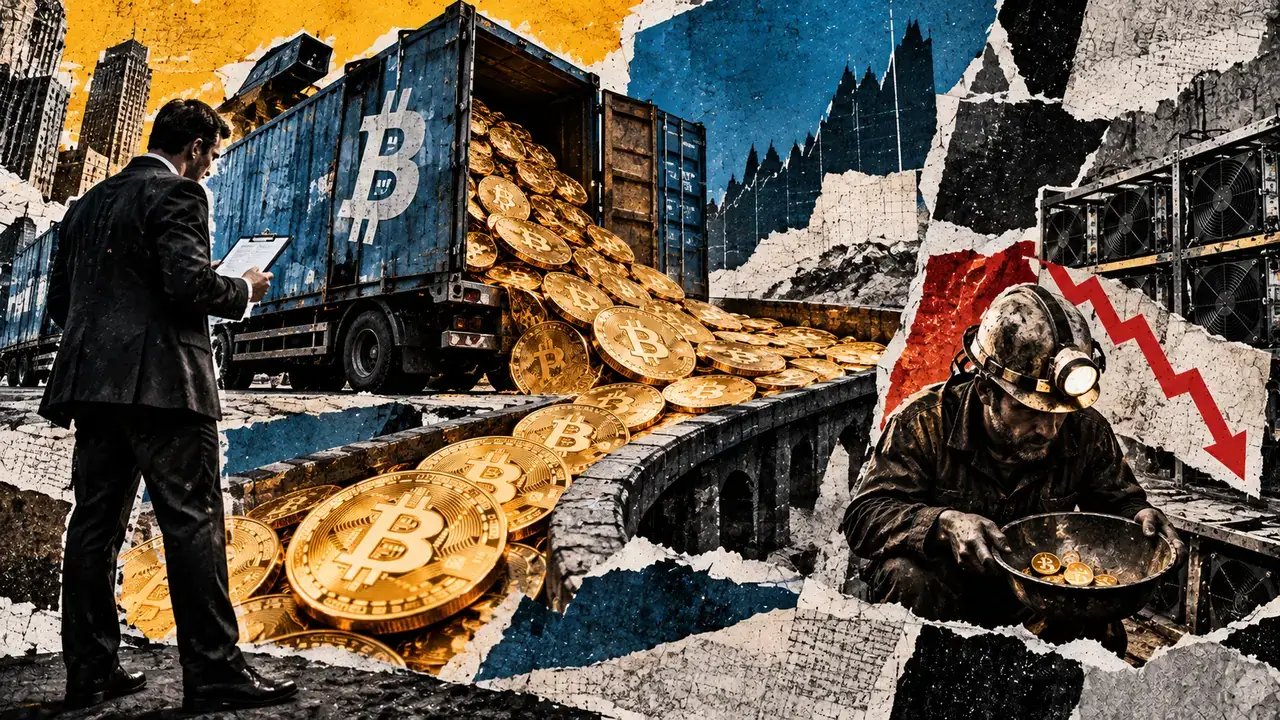
On October 26, 2026, the Bitcoin network processed over $5 billion in settlement value while miners collected just $185,000 in transaction fees. This significant disparity occurred because the day's volume was largely driven by high-value institutional transfers rather than a surge in retail activity. By utilizing SegWit and transaction batching, these large entities were able to move massive amounts of capital without triggering the high-fee environment typically associated with network congestion.
Data from Glassnode indicates that while the total value moved was substantial, the number of active addresses saw a noticeable decline. This divergence suggests that a smaller group of 'whales' or institutional custodians were responsible for the majority of the network's economic activity. In the current 2026 market, this efficiency is largely credited to the maturity of US-regulated spot ETFs and institutional clearinghouses, which aggregate thousands of client trades into single, optimized on-chain settlements.
From a regulatory perspective, this high-value settlement efficiency bolsters the argument that Bitcoin serves as a superior global settlement rail. US lawmakers have increasingly looked at on-chain transparency to monitor systemic risk, and the ability to move $5 billion with minimal friction demonstrates the network's growing role in the formal financial system. However, this efficiency creates a paradox for the mining industry, which relies on these fees to supplement diminishing block rewards following recent halvings.
For investors and miners, this trend is a double-edged sword. While low fees encourage adoption and high-value transfers, sustained low revenue for miners could impact the network's hash rate stability if operational costs are not met. The market should watch for a potential increase in 'Metaprotocol' activity or retail-driven congestion, which would be necessary to drive fee revenue back to levels that incentivize long-term network security.
Moving forward, market participants should monitor the 'Fee-to-Reward' ratio closely. If institutional settlement continues to dominate while retail participants stay on Layer 2 solutions like the Lightning Network, the base layer may remain a low-fee environment indefinitely. This would force a shift in miner business models toward energy arbitrage and secondary service offerings to maintain profitability through the end of 2026.