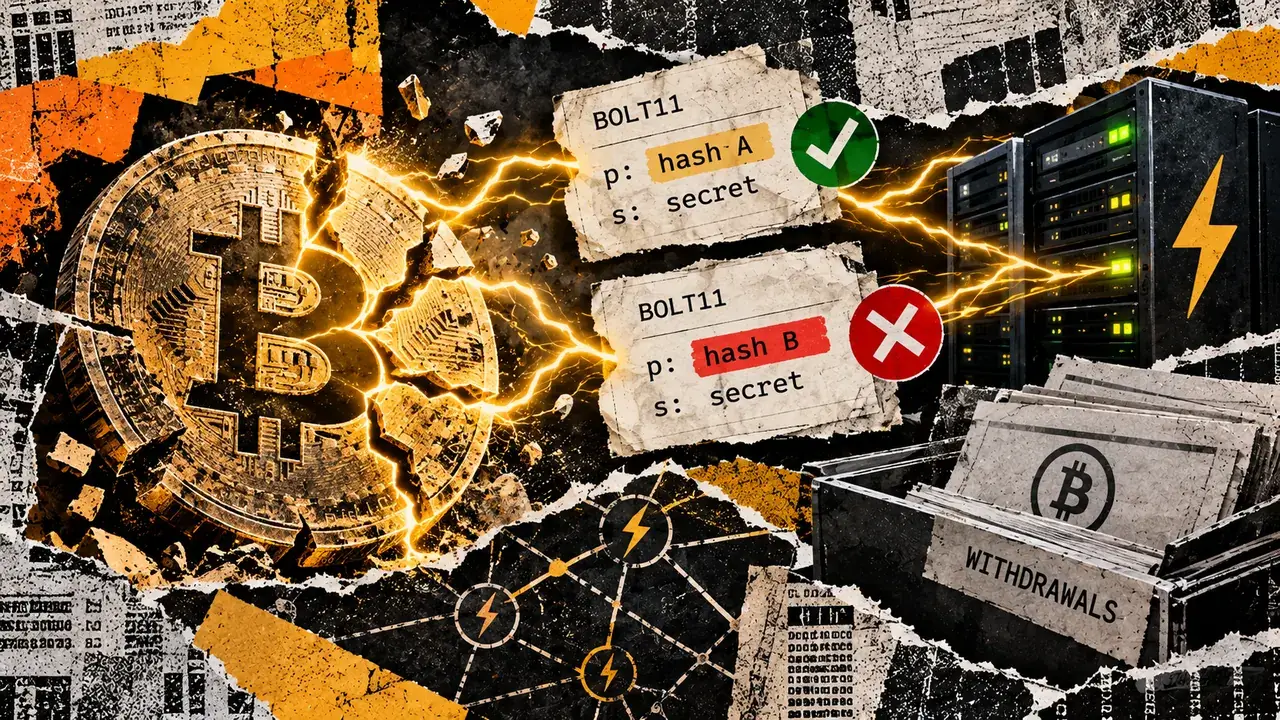
The Lightning Network has implemented stricter BOLT11 invoice rules, now requiring the mandatory presence of both a payment hash and a unique payment secret for every transaction. This change directly addresses a vulnerability where malicious actors could manipulate the status of a withdrawal, making it appear "unpaid" to the sender while the funds were actually successfully routed. By enforcing the payment secret requirement, the protocol ensures that only the intended recipient can prove they have received the payment, effectively closing the loop on fraudulent reporting exploits.
This update follows a series of reported attacks in early 2026 targeting exchange withdrawal systems and automated node software. In these scenarios, attackers exploited the lack of a mandatory secret to confuse the accounting logic of node operators, leading to discrepancies between the network state and internal ledgers. Developers across major implementations—including LND and Core Lightning—are now urging all node operators to manually audit their database records to ensure their software is correctly logging the finality of these transactions.
From a market perspective, this security hardening is a necessary step for Bitcoin's Layer 2 scaling to support institutional-grade volume. While the fix addresses a critical flaw, it imposes a short-term operational burden on service providers and custodial wallets, who must quickly update their backend infrastructure to comply with the new standards. Failure to transition to these tightened invoice rules could result in failed payments or significant financial slippage due to the very exploits the patch aims to mitigate.
Moving forward, the industry should monitor the adoption rate of these updated invoices across mobile wallets and merchant processors to ensure network-wide compatibility. Bitcoin analysts are also turning their attention to the upcoming BOLT12 integrations, checking for similar vulnerabilities in the newer protocol standards that aim to improve privacy and recurring payment features. Maintaining the integrity of Lightning withdrawals is crucial for Bitcoin's continued push toward mainstream medium-of-exchange status.