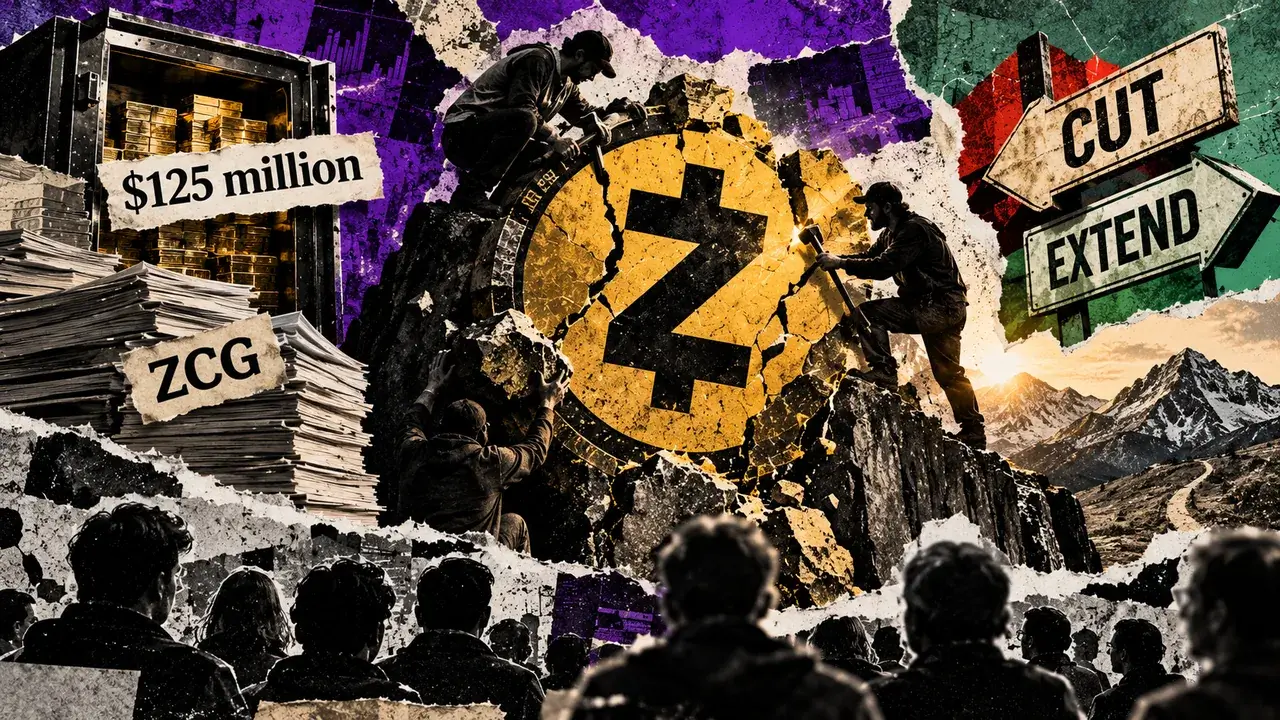
The push to end Zcash Community Grants (ZCG) subsidies in 2026 is driven by the argument that the program has successfully built a $125 million reserve, which is sufficient to fund network development for years without further block reward allocations. Tyler Winklevoss and Zcash co-founder Sean Bowe are leading the charge to stop automatic payments, suggesting that the current structure—which they liken to "USAID"—creates unnecessary sell pressure and lacks the fiscal discipline needed for Zcash’s long-term survival.
Sean Bowe’s recent proposal suggests that the ZCG no longer needs a continuous stream of ZEC from the block reward because the existing funding reserves have swelled due to increased investor interest and market appreciation. By halting these automatic transfers, the Zcash network would effectively transition toward the "Zcash Sustainability Fund," a model designed to make the privacy network more economically robust by moving away from perpetual dilution of its native token.
This funding fight comes at a critical geopolitical and regulatory juncture for privacy coins. US-based exchanges like Gemini, co-founded by Winklevoss, are under increasing pressure to ensure the assets they list have sustainable and transparent governance models. Transitioning Zcash away from a centralized-grant-funding model toward a more decentralized, reserve-based system could help the project navigate the rigorous compliance requirements currently being scrutinized by US regulators regarding the long-term decentralization of proof-of-work protocols.
For ZEC investors, the removal of the developer subsidy is largely viewed as a bullish supply-side event. By stopping the flow of new ZEC to grant recipients who often sell to cover operational costs, the proposal could significantly reduce the daily sell pressure on the coin. However, critics worry that removing guaranteed funding might stall innovation if the $125 million reserve is mismanaged or if market volatility erodes the value of the existing treasury.
The community is now closely watching the upcoming governance vote scheduled for late 2026, which will decide the fate of the block reward distribution. If passed, this would represent the most significant shift in Zcash’s monetary policy since its inception, potentially setting a precedent for other privacy-focused protocols to reconsider their own developer funding mechanisms in a more mature crypto market.