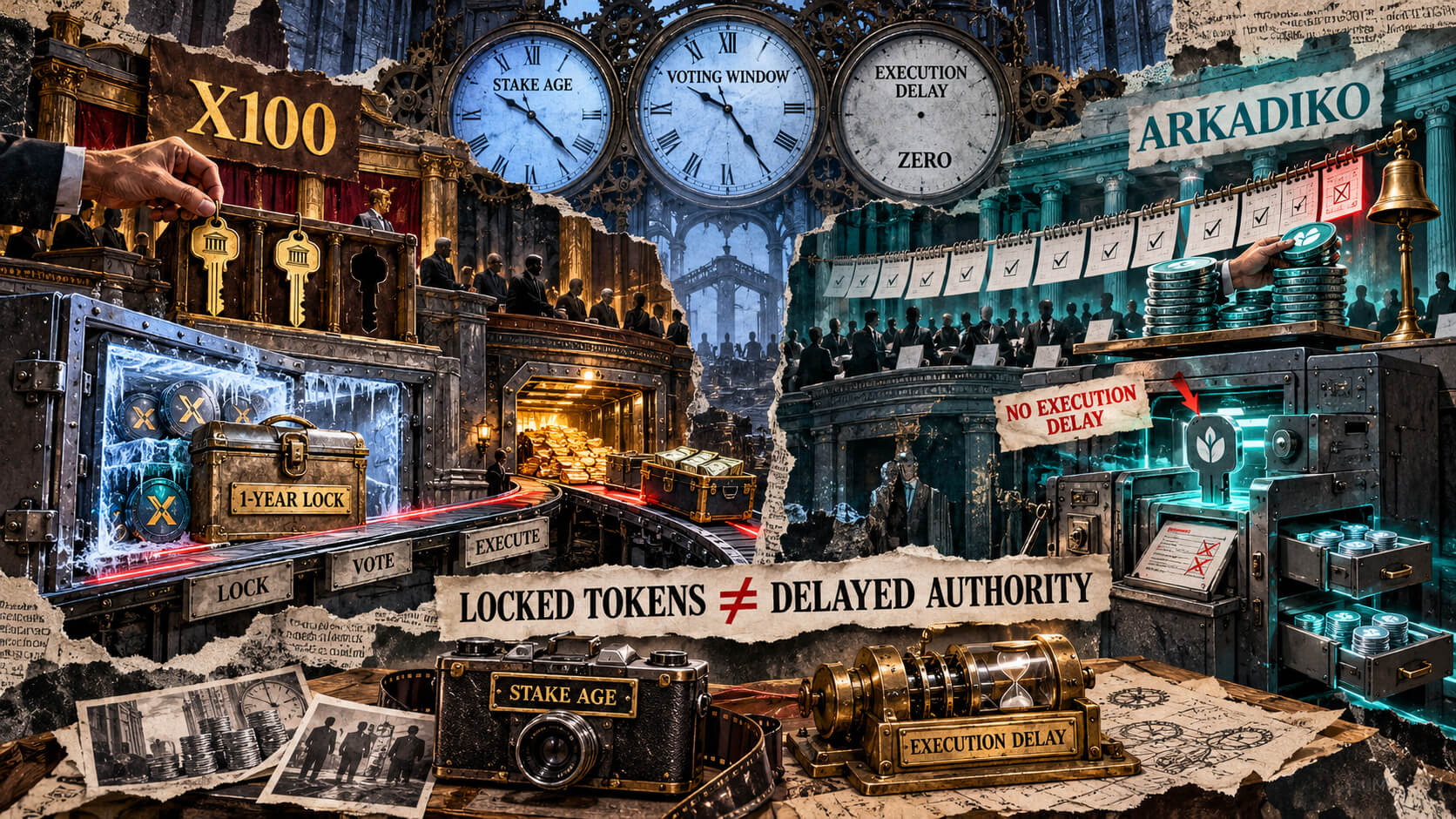
The $6 million loss at X100 was caused by a governance flaw that allowed an attacker to use a flash loan to manipulate a protocol vote. The exploit was made possible because the Arkadiko ballot system accepted token purchases made late in the voting cycle, which the attacker used to push through a malicious proposal. By the time the governance stake was supposed to be locked, the attacker had already siphoned the funds and repaid the flash loan using the stolen proceeds.
Technically, the breach involved a synchronization failure between X100’s locking mechanism and Arkadiko’s voting interface. The attacker acquired a massive amount of tokens via a flash loan, voted on a proposal to redirect protocol reserves, and then exploited a loophole where the system failed to verify the timing of the token acquisition relative to the ballot start. This allowed the malicious actor to exit their position with the loot before the governance lock could prevent the movement of the underlying assets.
This incident comes at a time of heightened regulatory scrutiny in the United States, as the SEC and CFTC continue to evaluate the legal liabilities of decentralized autonomous organizations (DAOs). The X100 exploit demonstrates the ongoing risks of 'governance attacks' in the DeFi space, where the speed of flash loans outpaces the traditional security checks of on-chain voting. US-based investors are increasingly calling for standardized 'time-weighted' voting to prevent such rapid manipulation of protocol treasuries.
Moving forward, market participants should watch for a formal post-mortem from the X100 development team and potential emergency patches for the Arkadiko ballot contract. There is also a strong possibility of a community-led 'white hat' recovery effort or a hard fork, depending on how much of the $6 million can be traced through current mixing services. Investors should remain cautious of protocols that allow mid-vote token purchases, as this event may trigger a broader re-evaluation of governance security across the Stacks and Ethereum ecosystems.