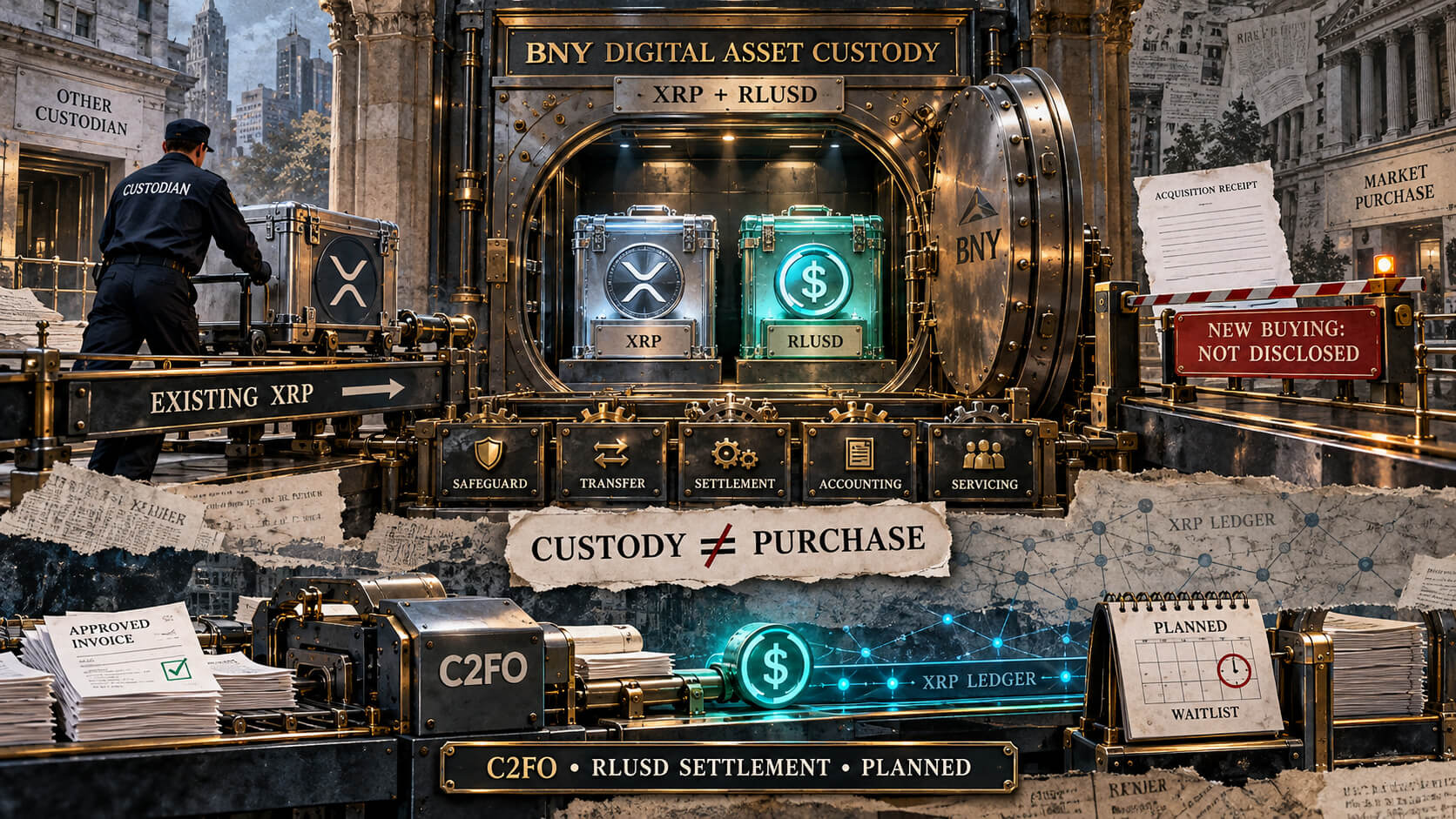
As of early 2026, BNY Mellon has officially opened XRP custody services to eligible institutional clients, allowing them to store and transfer existing tokens within the bank's secure environment. However, this initial rollout is restricted to custody only; the bank does not currently facilitate the direct purchase of new XRP tokens through its platform. This means that while institutions can move their pre-existing holdings into BNY Mellon's vaults, they must still utilize external exchanges or brokers for new acquisitions.
This development follows a period of heightened regulatory stabilization in the US crypto market. By providing a secure, regulated custody solution for XRP, BNY Mellon is addressing long-standing institutional demand for professional-grade storage of Ripple-associated assets. The bank’s decision to limit the service to 'transfers only' reflects a conservative compliance strategy, ensuring that the bank acts as a secure custodian rather than a primary broker-dealer for digital assets during this phase of the 2026 market expansion.
From a market perspective, the entry of the world’s largest custodial bank into the XRP ecosystem provides a massive boost to the token’s legitimacy among conservative asset managers. This move is expected to bridge the gap between traditional finance (TradFi) and the XRP Ledger, potentially leading to increased liquidity as more institutions feel comfortable holding the asset long-term on a regulated balance sheet. It also puts pressure on other 'Big Three' custodians to accelerate their own digital asset roadmaps.
Moving forward, investors should watch for an expansion of this service to include secondary market trading or integrated 'buy/sell' features within the BNY Mellon interface. Additionally, the industry is closely monitoring whether this custody model will be extended to other top-tier altcoins later in 2026. For now, the focus remains on how many existing XRP whales and institutional holders migrate their assets to BNY Mellon for the added layer of institutional security.