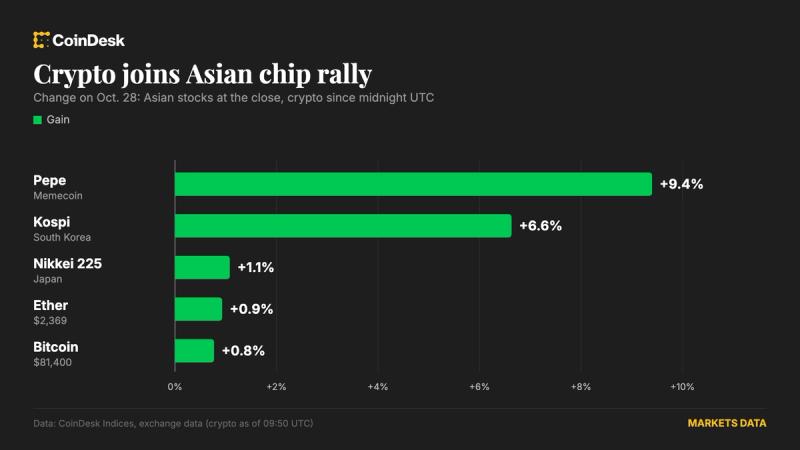
Bitcoin surpassed the $81,400 mark during the 2026 trading session, driven primarily by a surge in Asian semiconductor stocks that revitalized investor confidence in high-beta assets. This upward momentum in the equity markets provided the necessary liquidity and sentiment shift for Bitcoin to break through key resistance levels, simultaneously lifting speculative assets like the frog-themed memecoin Pepe, which saw a 9% gain. The rally demonstrates a strengthening bond between the hardware foundations of the AI industry and the valuation of the broader crypto ecosystem.
The market movement was sparked by a breakthrough in chip manufacturing efficiency reported by major Asian tech conglomerates, which led to a green sweep across the Nikkei and Hang Seng indices. As traditional tech investors sought to diversify their gains, a significant portion of that capital migrated into Bitcoin and high-volume altcoins. This 'risk-on' environment suggests that crypto is no longer trading in a vacuum but is deeply integrated into the global technological trade cycle.
From a geopolitical perspective, the rally signals that Asian market sentiment remains a dominant force in setting the pace for 2026 crypto valuations, often front-running US market openings. For US-based investors, this indicates that the correlation between semiconductor supply chains and crypto liquidity is a vital metric to monitor. The ability of Bitcoin to hold above $81,000 during this equity-driven spike suggests a solidifying floor supported by institutional tech-adjacent capital.
Moving forward, traders should watch for the sustainability of the semiconductor rally and its impact on the Nasdaq-100. If the chip sector faces a correction due to supply constraints or 2026 trade regulations, Bitcoin may experience a test of its recent support levels. Additionally, the outperformance of memecoins like Pepe during these spikes indicates that retail appetite for high-volatility assets remains high when Bitcoin leads the charge.