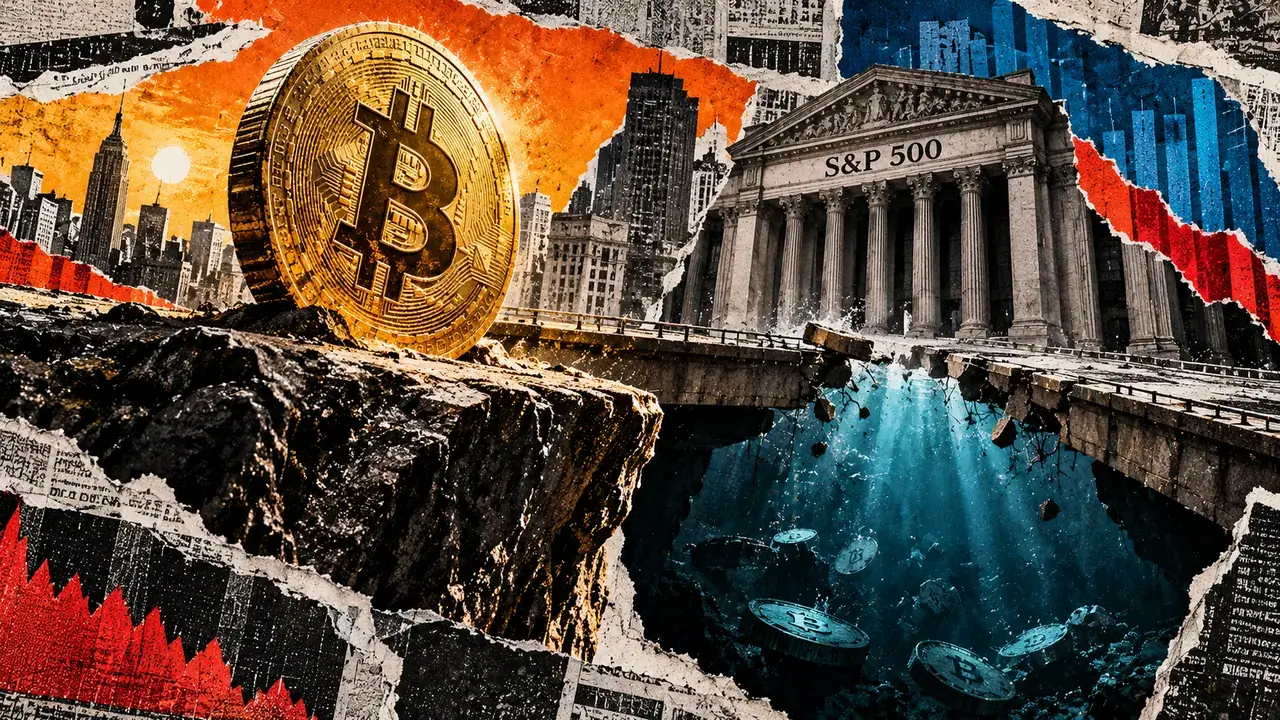
In the final quarter of 2026, Bitcoin is increasingly outperforming the S&P 500 on a daily basis, with its relative win rate climbing back above 50% after a stagnant summer period. According to new data from Glassnode, this recovery signifies a major shift from June 2026, when Bitcoin only beat the S&P 500 in one out of every five trading sessions—its weakest stretch in six years. While monthly performance remains subject to broader macro volatility, the daily price action suggests a growing decoupling from traditional equities during US trading hours.
The surge in daily performance is closely linked to a massive concentration of institutional capital. A Coinbase Institutional report released on October 23, 2026, reveals that BlackRock’s IBIT has attracted approximately $6 billion in fresh capital since August 1, 2026. This figure is particularly striking when compared to the rest of the market, as all other US-based spot Bitcoin ETFs combined saw only $500 million in inflows during the same period. This disparity highlights a 'flight to quality' where major allocators are funneling liquidity almost exclusively through the largest market players.
From a regulatory and political perspective, this institutional dominance provides a cushion against the typical 'risk-off' sentiment that affects the S&P 500 during periods of economic uncertainty. As US investors look toward the year-end fiscal projections of 2026, the steady buy-side pressure from IBIT helps Bitcoin maintain its footing even when the broader stock market falters. This creates a unique market dynamic where Bitcoin’s 'daily wins' act as a leading indicator of institutional confidence, even if the monthly candle has yet to reflect a full breakout.
Moving forward, traders should watch whether this daily win rate can be sustained without the singular support of BlackRock’s inflows. If the $6 billion inflow trend slows, Bitcoin may return to its higher correlation with the S&P 500. Investors should also monitor upcoming Federal Reserve commentary in late 2026, as any shifts in interest rate policy could either solidify Bitcoin’s status as a 'digital gold' alternative or drag it back into the volatile cycle of high-growth tech stocks.