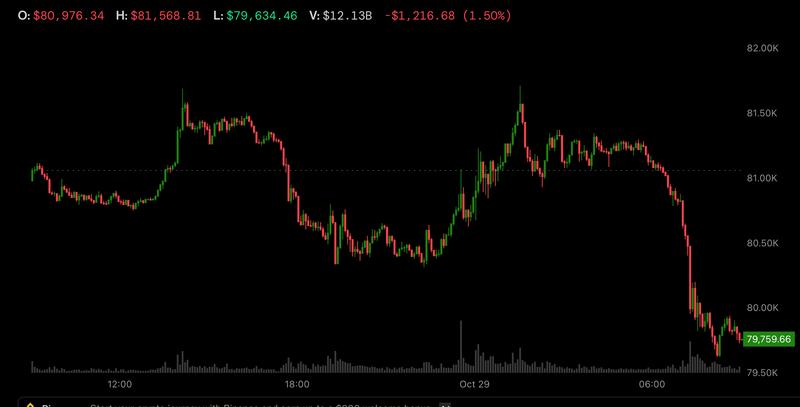
Bitcoin dropped below $80,000 in early 2026 trading as a sell-off in the technology sector, spearheaded by Samsung's latest earnings jitters, merged with a hawkish Federal Reserve update to dampen investor appetite for risk. The convergence of traditional tech weakness and restrictive monetary policy forced Bitcoin out of its recent consolidation range, catching over-leveraged traders off guard. This volatility led to the liquidation of $356 million in long positions, further accelerating the downward price action as the market searched for a new floor.
The primary catalyst was a ripple effect from the consumer electronics and semiconductor sector. As Samsung issued a cautious outlook for tech demand in mid-2026, institutional investors moved to de-risk their portfolios, selling off high-beta assets including cryptocurrencies. Because Bitcoin has increasingly correlated with the Nasdaq and major global tech indices throughout 2026, the 'Samsung jitters' served as a macro trigger for the crypto market's sharp correction.
Simultaneously, the Federal Reserve signaled that it would keep interest rates higher for longer, defying market hopes for a mid-year pivot. This hawkishness increased the appeal of the US Dollar and Treasury yields while draining liquidity from the DeFi and crypto spot markets. The $356 million in liquidations highlights the fragility of current market leverage, as many traders had positioned for a breakout above $85,000 that failed to materialize.
Moving forward, US-based investors should closely monitor the $78,500 support zone, which served as a historical accumulation point earlier this year. If tech stocks continue to struggle and the Fed maintains its aggressive rhetoric, further downside towards $75,000 is possible. The next key event to watch will be the upcoming US Consumer Price Index (CPI) print, which will dictate whether the Fed has room to soften its stance or if the current 'higher for longer' regime will continue to weigh on Bitcoin’s valuation.