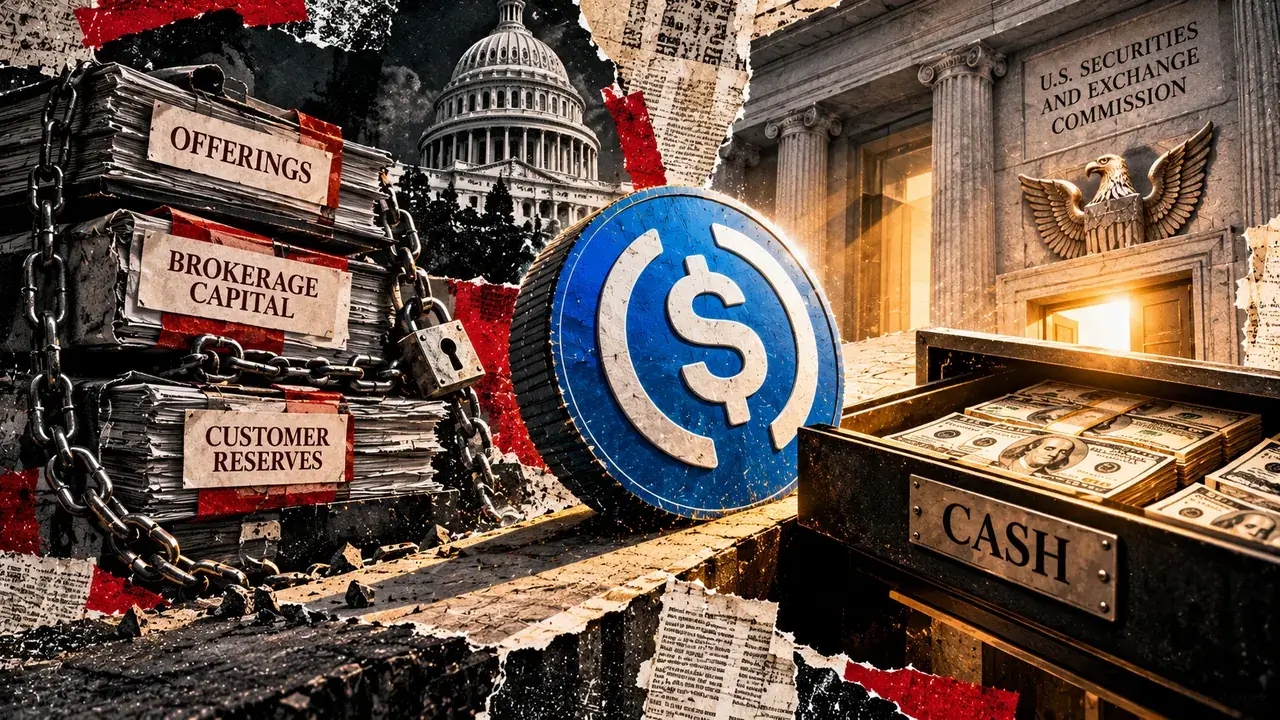
Circle has formally requested that the SEC establish separate regulatory permissions for stablecoin offerings, brokerage capital, and customer reserves to remove a costly legacy rule holding back the industry. The issuer of USDC argues that current Wall Street-style accounting treatments, which often require custodial assets to be listed as liabilities on a balance sheet, create an artificial capital burden that stifles the growth of regulated US stablecoins. By distinguishing these reserves, Circle aims to lower the barrier for banks and financial institutions to hold and facilitate USDC transactions without facing prohibitive capital charges.
This 2026 regulatory push comes as the SEC faces increasing pressure to harmonize its rules with evolving stablecoin legislation. Circle’s letter highlights a friction point where existing brokerage rules do not account for the high-liquidity, 1-to-1 backing of USDC by US Treasuries. If the SEC grants these separate permissions, it would effectively modernize the definition of 'custody' for the digital era, allowing issuers to operate with greater capital efficiency while maintaining strict consumer protections.
For the broader crypto market, this development is a critical step toward the mass adoption of tokenized real-world assets (RWAs). If Circle succeeds, USDC could see a massive influx of institutional liquidity as the 'cost of compliance' drops for major financial players. This would solidify USDC’s position as the preferred dollar-pegged asset for compliant DeFi protocols and cross-border settlements, potentially challenging the dominance of less regulated offshore stablecoins.
Market participants should watch for a formal response from the SEC regarding the treatment of 'off-balance-sheet' reserves. A favorable ruling would be a significant victory for US-based crypto firms and could trigger a wave of similar petitions from other major issuers like PayPal and Paxos. As the 2026 regulatory landscape takes shape, the outcome of this petition will serve as a bellwether for the future of regulated stablecoin growth in the United States.