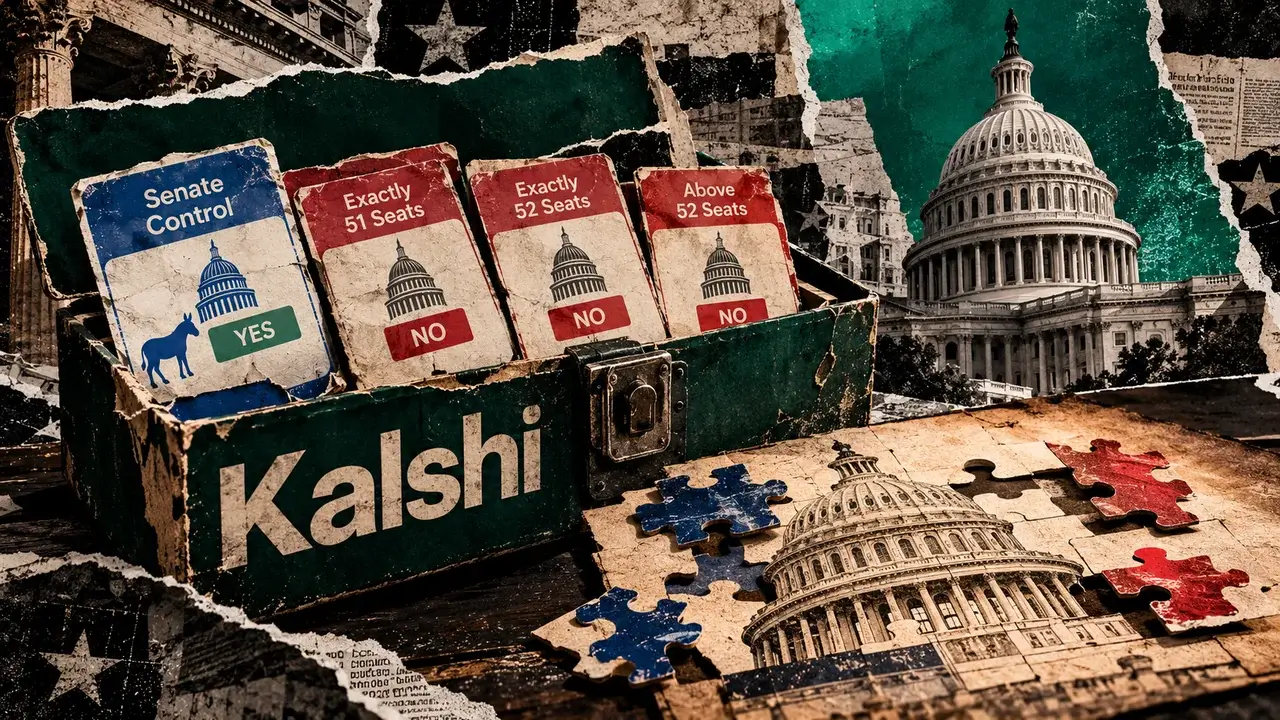
Kalshi's 2026 Senate election contracts are designed to settle based on specific, independent criteria for each individual contract, meaning different markets covering the same election can yield different financial results. This structural choice stems from the platform’s need to define clear, verifiable data triggers for each contract—such as official state certifications versus the first call from a designated news desk—which do not always align in timing or definition. As seen in recent Oct. 28 market snapshots, these differing settlement rules can expose traders to unexpected losses even when the underlying political outcomes appear to align, as the specific 'source of truth' for one contract may trigger a payout while another remains pending or settles differently.
This situation has significant implications for the 2026 U.S. Midterm elections, where control of the Senate is a high-stakes event for crypto-adjacent legislation. Since Kalshi operates as a regulated exchange under the Commodity Futures Trading Commission (CFTC), the precision of these settlement rules is a matter of regulatory compliance. However, for the average trader, the nuance between a 'Senate Majority' contract and a 'Specific Seat' contract can lead to 'basis risk,' where the hedge intended to protect a portfolio fails because the two contracts do not move or settle in perfect tandem.
For the broader crypto and prediction market ecosystem, these settlement discrepancies highlight the growing pains of moving political forecasting into a regulated financial environment. While decentralized platforms like Polymarket often rely on decentralized oracles or community consensus, Kalshi’s reliance on rigid, pre-defined rulebooks provides more legal certainty but less flexibility when election results are contested or reported inconsistently. This can deter liquidity if traders feel the technicalities of the contract are more volatile than the election itself.
Investors and political analysts should closely watch for any emergency rule amendments from Kalshi or guidance from the CFTC as the 2026 Midterms approach. The ability of these markets to provide an accurate 'signal' for the crypto industry depends entirely on the reliability of their settlement mechanisms. Any significant loss caused by 'conflicting answers' on the same election could prompt a shift in volume back to decentralized alternatives or lead to stricter oversight on how prediction markets define a 'win.'