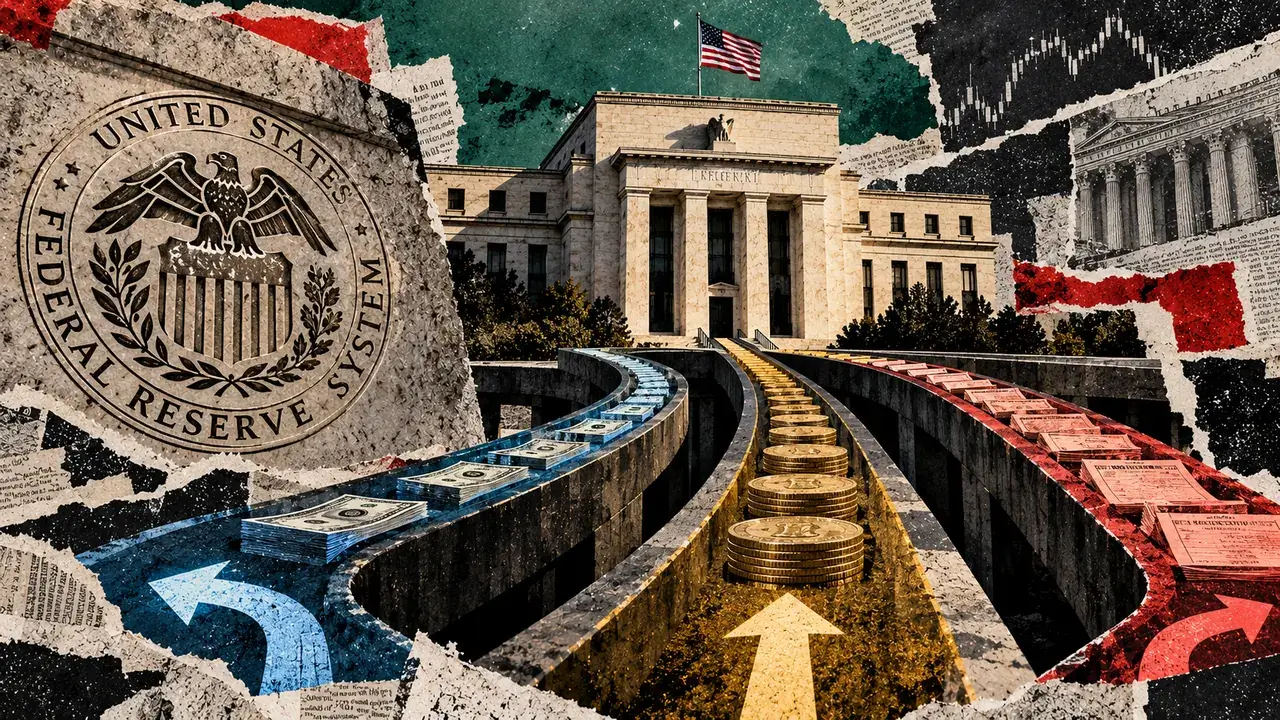
The Federal Reserve’s October 29, 2026, rate settings—keeping reserve interest at 3.90%, standing repos at 4.00%, and reverse repos at 3.75%—will have a negligible impact on market stability unless banks resolve the current repo market bottleneck. While these rates are intended to provide a floor and ceiling for the cost of borrowing, a breakdown in the plumbing of the financial system means that liquidity is not reaching the broader market as intended. For the crypto industry, which relies heavily on excess dollar liquidity, this structural 'clog' acts as a hidden tightening mechanism that could offset any benefits from the Fed's decision to stop hiking rates.
The current bottleneck stems from major US banks facing regulatory constraints that limit their ability to facilitate repo transactions, even when the Fed’s standing facility is active. This friction prevents capital from flowing efficiently between traditional finance and the crypto-adjacent shadow banking sector. As a result, short-term borrowing costs for institutional crypto desks remain volatile, making it more expensive to maintain leveraged positions in Bitcoin and Ethereum despite the official 'rate freeze.'
This situation creates a complex environment for US-based digital asset traders. Usually, a Fed pause signals a 'risk-on' environment, but the repo bottleneck suggests that financial conditions are tighter than the official headline rates indicate. If banks cannot act as efficient intermediaries, the market may see a 'liquidity crunch' where asset prices stagnate or drop because the mechanical flow of money is restricted, regardless of what the Fed says at the podium.
Looking ahead, investors should closely watch the spread between the effective federal funds rate and the repo rate throughout the remainder of 2026. If the gap widens, it indicates that the bottleneck is worsening, which typically precedes a pull-back in high-risk assets. Regulatory shifts regarding bank leverage ratios (such as the SLR) will be the key catalyst to watch, as any relief there could finally clear the repo bottleneck and allow the next major wave of liquidity to enter the crypto markets.