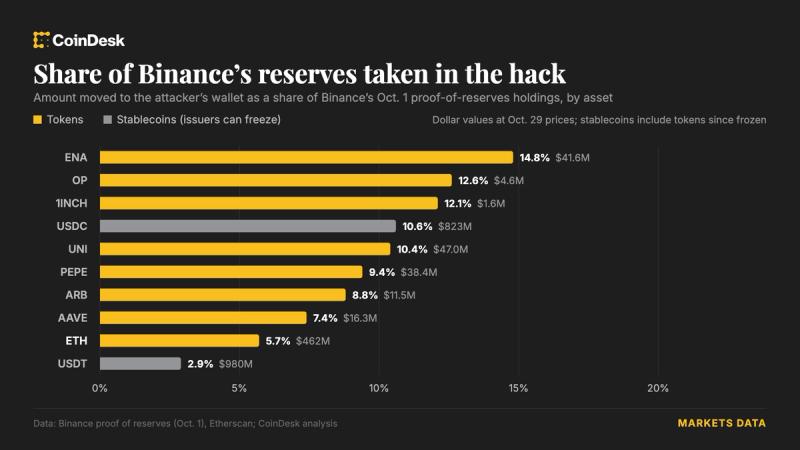
The recent Binance wallet hack has resulted in a 6% deficit in Ether (ETH) reserves relative to customer balances, according to the exchange's latest reserve transparency data. The wallets targeted by the attackers were specifically designated as backing for user deposits, meaning the platform is currently operating without full collateralization for its ETH holdings. Binance management has stated they are working to replace the missing funds, but until that process is complete, the exchange remains technically undercollateralized for one of its most traded assets.
The breach was identified through an analysis of on-chain reserve data, which showed that the assets moved during the exploit were the same funds Binance categorized as customer backing in its 2026 transparency reports. This incident highlights a critical vulnerability in how centralized exchanges manage their 'Proof of Reserves' (PoR). While PoR is designed to provide transparency, it also allows the public to see exactly how much is missing when a security failure occurs, potentially triggering a loss of user confidence.
From a regulatory perspective, this event comes at a time when US agencies like the SEC and CFTC have increased their oversight of exchange custody practices. In the current 2026 regulatory environment, a 6% shortfall in customer assets—even if temporary—could lead to formal inquiries into Binance’s risk management and the adequacy of its 'SAFU' insurance fund. Regulators are increasingly looking for real-time, third-party audited proof that customer funds are segregated and fully backed at all times.
Market implications are already being felt as ETH holders on the platform begin to withdraw funds to self-custody wallets, fearing a liquidity crunch. If the withdrawal volume exceeds the available liquid reserves, Binance may be forced to liquidate other holdings to meet demand, which could create broader market volatility. The situation serves as a stark reminder of the 'not your keys, not your coins' mantra that continues to dominate crypto security discourse in 2026.
Investors and users should monitor Binance’s official reserve dashboard and on-chain wallet addresses for signs of replenishment. The key metric to watch is the 'ETH Reserve Ratio'; until this returns to 100% or higher, the platform faces heightened counterparty risk. Additionally, any statements from the US Treasury regarding the systemic impact of the hack will be crucial for determining the long-term impact on the exchange’s ability to operate within the American market.