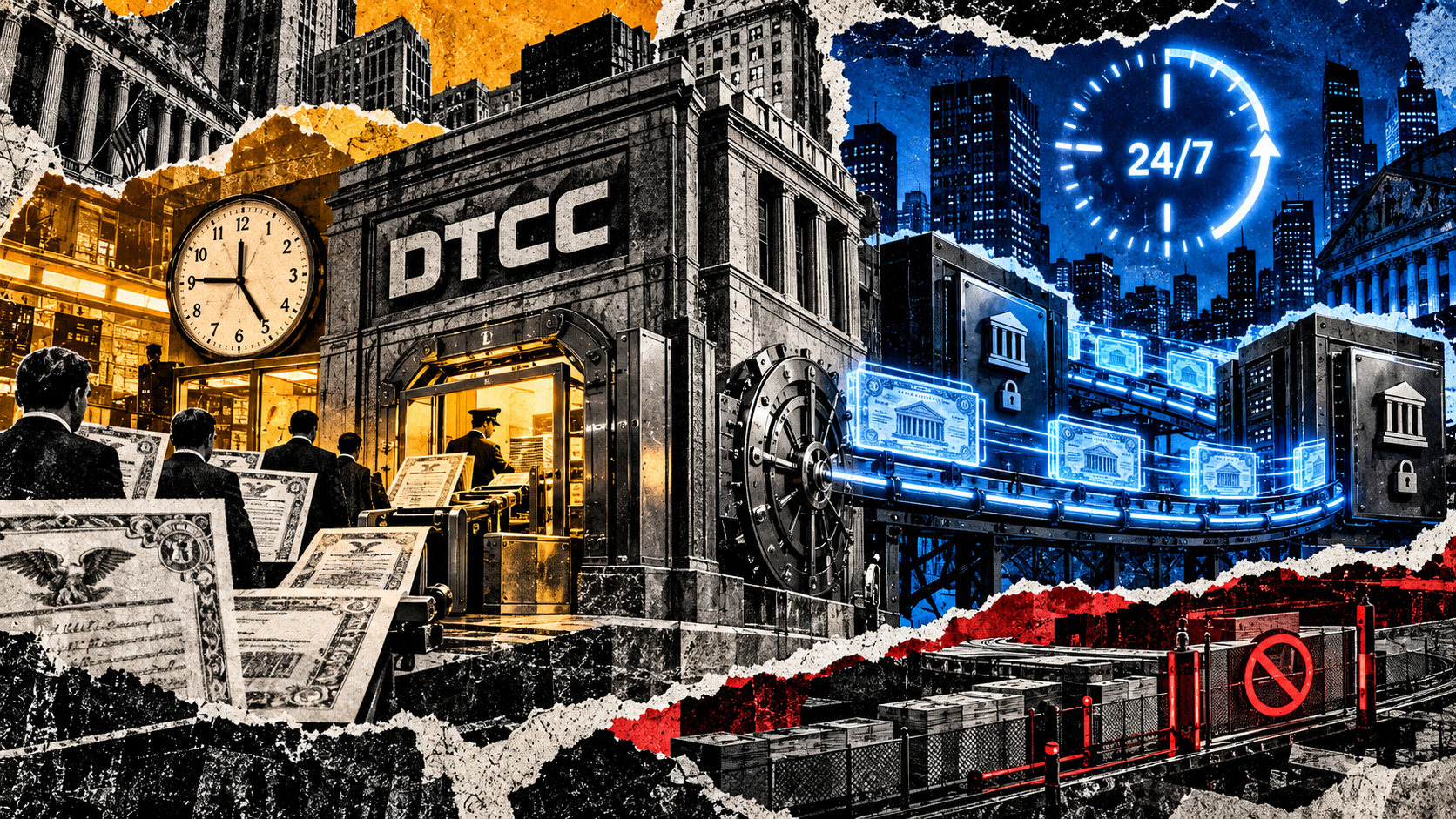
In early 2026, the DTCC Digital Assets service has implemented a dual-layered approach to tokenized security settlement where transfers between registered wallets occur 24/7, while asset conversions remain bound to traditional business hours. This means that while investors can move their 34 qualifying securities across the network on weekends, the actual 'minting' or 'burning' of tokens against their underlying legacy assets still requires a standard business-day window. This distinction is critical for institutional liquidity management, allowing for immediate collateral movement without yet achieving full 24/7 asset creation.
The participation of 20 major financial institutions marks a significant step for U.S. market infrastructure, signaling a transition toward instantaneous settlement cycles. By allowing weekend movement, the DTCC is effectively decoupling ownership transfer from the legacy clearinghouse clock. However, the fact that only 34 securities currently qualify suggests that the vetting process for high-grade tokenized collateral remains rigorous under current regulatory guidelines, focusing on ensuring stability before a wider rollout.
For the broader crypto and DeFi markets, this development strengthens the Real World Asset (RWA) narrative. As more institutions integrate with DTCC’s ledger, the utility of programmable collateral in the U.S. increases, potentially reducing liquidity crunches during volatile periods when traditional banks are closed. The ability to move tokenized Treasury bills or corporate bonds on a Sunday could drastically change how hedge funds and market makers manage margin requirements.
Moving forward, investors should watch for an expansion of the qualifying securities list and potential updates to conversion windows. The success of these initial 20 institutions in managing weekend liquidity will likely determine how quickly other major clearinghouses and global custodial banks adopt similar blockchain-based transfer protocols. If the conversion bottleneck is eventually resolved, it would represent the final step in merging traditional finance with 24/7 crypto-native market structures.