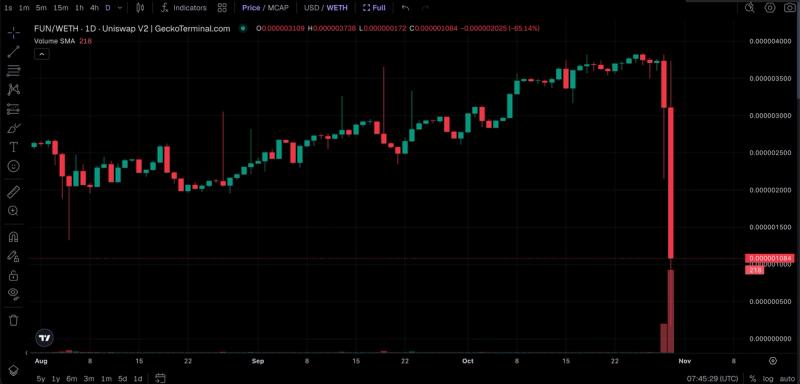
The sudden 90% collapse of the FUN token in early 2026 was caused by a Binance-linked hacker liquidating stolen assets through order books with extremely thin liquidity. By dumping a massive volume of the 2017-era token into markets incapable of handling the sudden sell pressure, the attacker triggered a localized flash crash. This maneuver allowed the exploiter to exit the position quickly, albeit at a lower price, before exchange security teams could freeze the associated accounts.
This incident is part of a broader trend in 2026 where attackers are 'rage-dumping' smaller altcoins recovered from long-dormant compromised wallets. While major assets like Bitcoin and Ethereum are typically laundered through sophisticated privacy protocols, these 'zombie tokens' are often sold directly on the open market. Because these projects have seen declining developer activity and trading volume over the last decade, even a relatively small dump of a few hundred thousand dollars can wipe out nearly all market value in seconds.
For US-based investors and platform operators, this event underscores the lingering systemic risks associated with listing low-volume legacy tokens. Regulators, including the SEC, have recently increased scrutiny on exchanges that facilitate trading for assets with concentrated liquidity, citing them as primary targets for market manipulation. This specific crash is expected to accelerate a wave of delistings across major US exchanges as they seek to minimize exposure to 'flash crash' volatility that can disrupt broader platform stability.
Market participants should now closely monitor other small-cap holdings within the known hacker-controlled wallet addresses. Security analysts warn that several other 2017-era projects remain at risk of similar 'death spirals' if the attacker continues to offload stolen inventory. As the industry moves further into 2026, the focus is shifting toward decentralized liquidity aggregators that might offer more resilience, though they currently lack the circuit breakers found on centralized platforms.