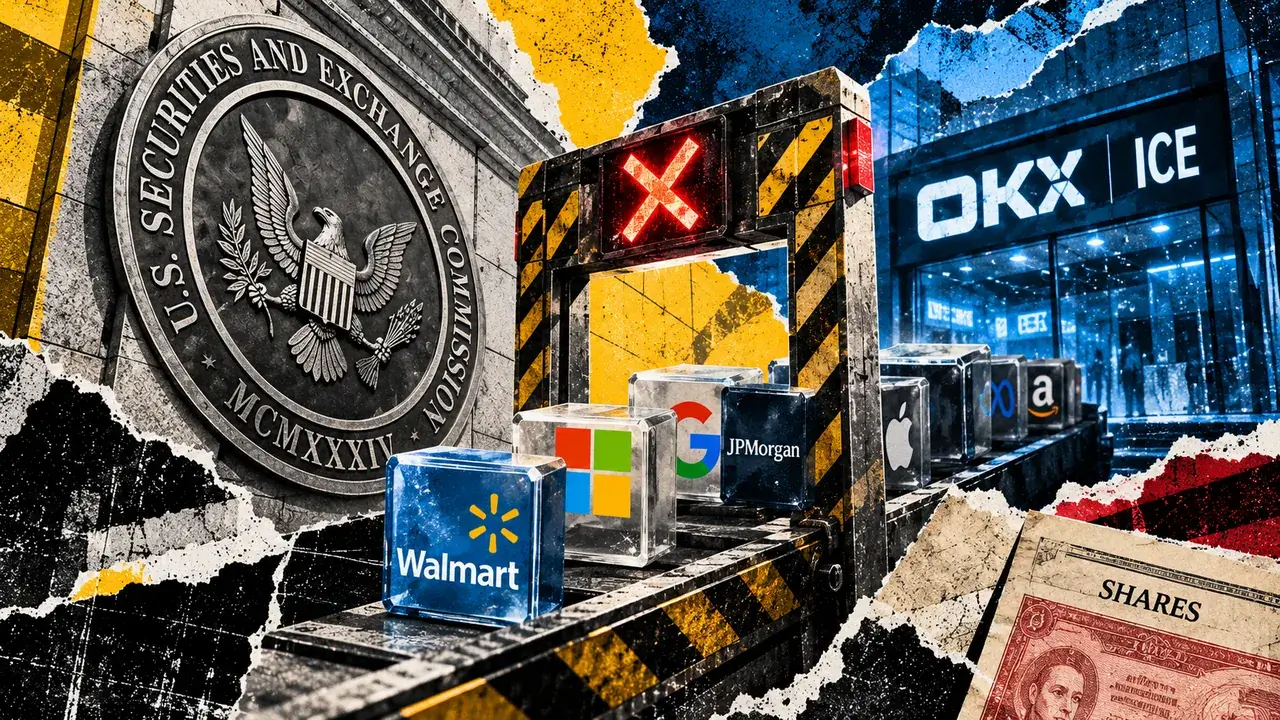
Walmart, Microsoft, and JPMorgan Chase have formally intervened to block a venture backed by the New York Stock Exchange (NYSE) from issuing tokenized versions of their corporate shares. The companies utilized a critical 30-day regulatory window to reject third-party proposals that would have brought their equity onto the blockchain. Their primary concerns center on the potential for pricing discrepancies between traditional and digital markets, as well as the disruption of existing fee structures that currently reward established trading venues.
The venture aimed to revolutionize market access by creating digital twins of S&P 500 stocks, allowing for 24/7 trading and fractional ownership. However, the resistance from these corporate giants highlights a fundamental conflict between the permissionless nature of DeFi and the controlled environment required by public companies. By blocking these proposals, the issuers are asserting that the risks—ranging from market manipulation to lack of oversight in secondary trading—currently outweigh the benefits of blockchain integration.
In the broader 2026 regulatory landscape, this pushback serves as a reality check for the Real-World Asset (RWA) sector. While the SEC has provided clearer frameworks for digital securities this year, the power remains firmly in the hands of the issuers. This development suggests that institutional stock tokenization will not be a third-party led revolution, but rather a slow, permissioned transition where corporations dictate the terms of their own digital presence.
Investors should closely monitor whether the NYSE-backed venture attempts to renegotiate its fee-sharing models or if other major tech and finance firms follow the lead of Microsoft and JPMorgan. If the trend of blocking third-party tokenization continues, the market may see a shift toward proprietary, company-led tokenization projects where the issuers maintain total control over liquidity and data. The remainder of 2026 will be pivotal in determining if the RWA market can scale beyond niche assets into the mainstream equity market.