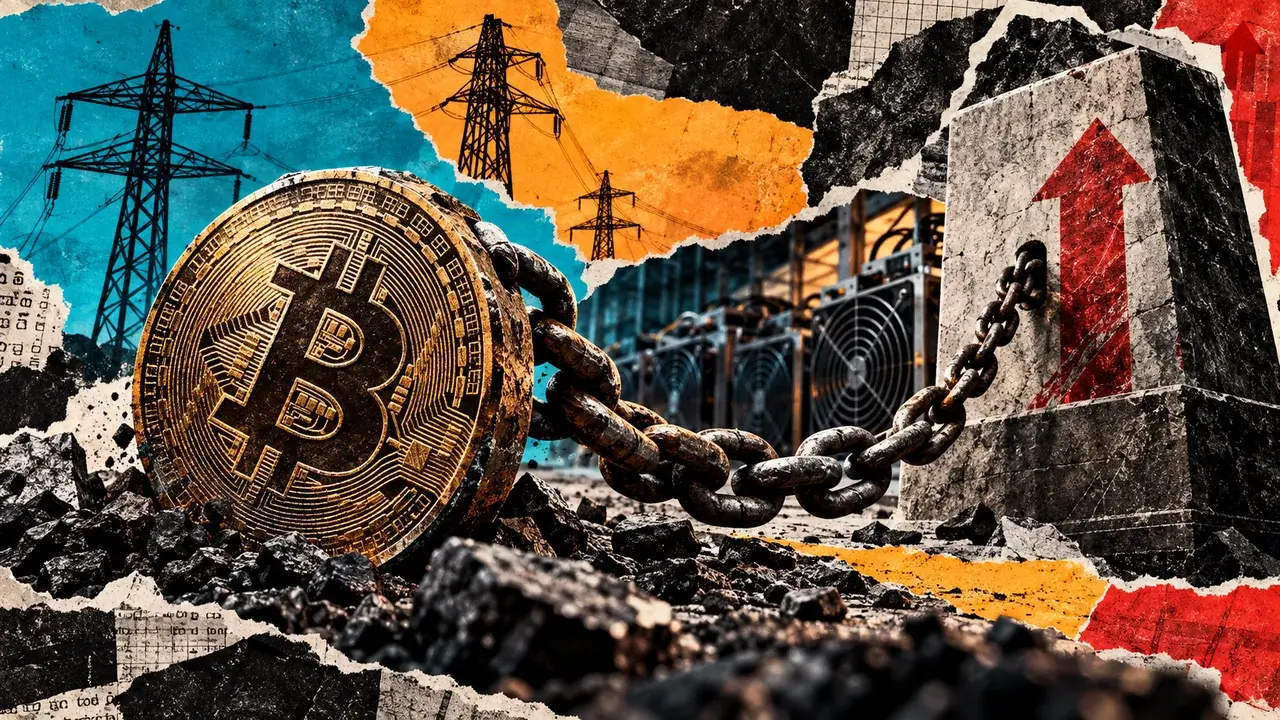
The surge in Bitcoin mining difficulty to 148 trillion significantly raises the barrier to entry for US miners, as daily revenues have plummeted to their lowest levels in three months. At the current hashprice, a typical 25 J/TH mining rig only covers its operational costs if electricity is priced at or below 5.45 cents per kWh, after accounting for standard 2% pool fees. This creates a challenging environment for North American firms facing rising industrial energy rates and increased competition from institutional-scale facilities.
This difficulty adjustment reflects a massive influx of global hashrate throughout late 2026, driven by the deployment of next-generation hardware and improved energy infrastructure. As the network becomes more secure, the economic reality for miners becomes harsher; the 'hashprice'—the value of the computing power provided to the network—is being squeezed by both the rising difficulty and stagnant price action. For many US-based publicly traded miners, this necessitates a shift toward more efficient rigs or securing 'behind-the-meter' energy sources to lower overhead.
From a regulatory and geopolitical perspective, the pressure on US miners is intensifying as local governments scrutinize energy consumption. While the Bitcoin network remains the most secure in history, the concentration of hashrate in regions with low-cost, subsidized power could lead to a minor exodus of US hashpower if revenues do not rebound. Market analysts are closely watching for signs of miner capitulation, where older machines are powered down, which historically has created temporary selling pressure on BTC as companies liquidate holdings to cover fixed costs.
Looking ahead, investors should watch the upcoming difficulty adjustments in November and December 2026. A continued rise in difficulty without a corresponding increase in the BTC price could trigger a consolidation phase in the US mining sector. Large-scale operators with significant cash reserves may begin acquiring distressed assets from smaller competitors who can no longer sustain operations at the 5.45-cent profitability threshold.