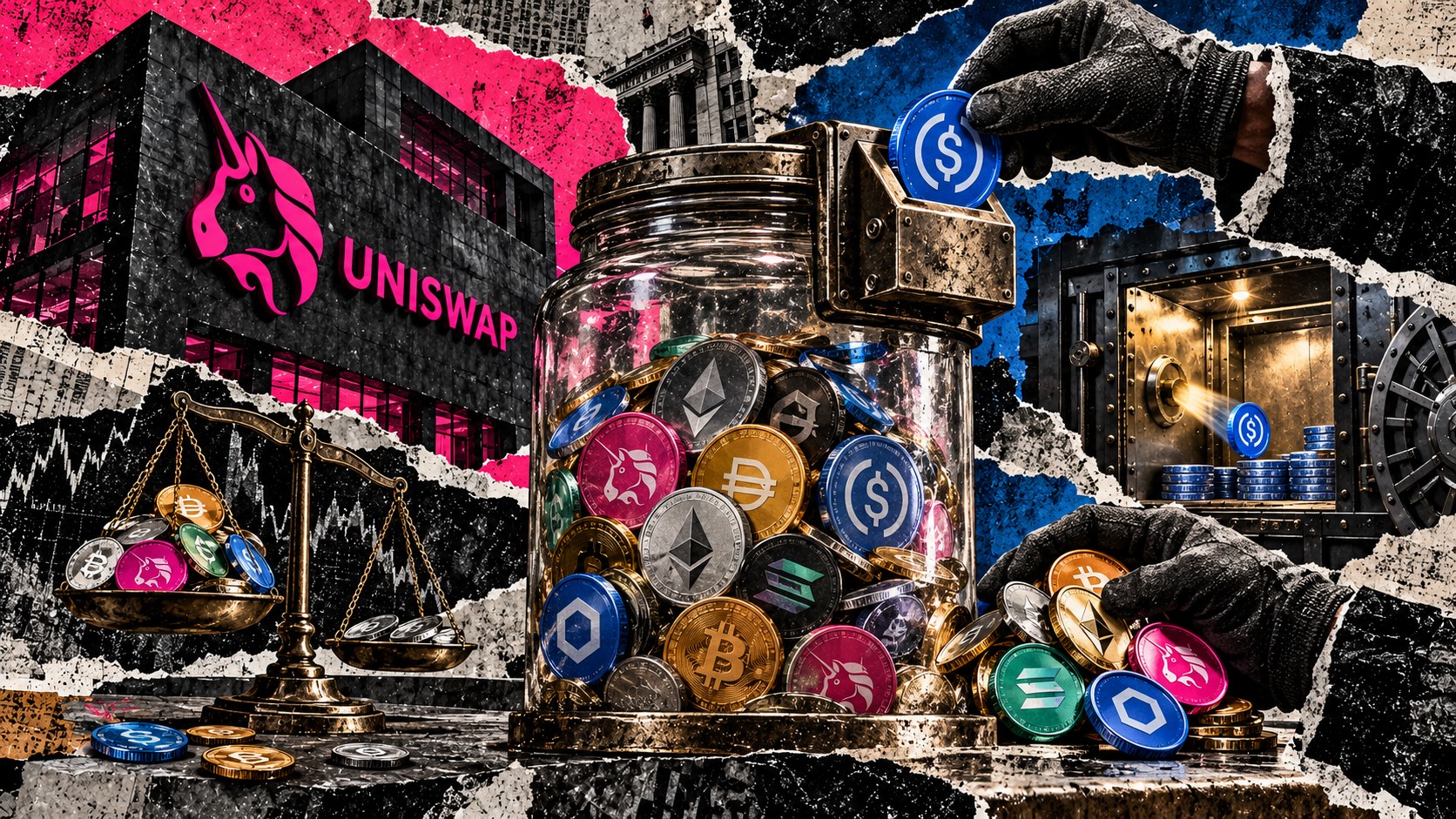
Uniswap’s launch of the TJAR (Tax-Justified Arbitrage Revenue) fee tool directly impacts arbitrage profitability by allowing partners like Robinhood to dictate the release price of stablecoin fee receipts. By controlling these release points, the protocol shapes the 'trader surplus'—the difference between the executed price and the market rate. However, because these price points often deviate slightly from real-time global aggregates, they create immediate arbitrage windows. Currently, these profits are being captured almost exclusively by high-frequency searchers who monitor Uniswap’s liquidity pools for these specific fee-release events.
Robinhood’s adoption of TJAR for its stablecoin operations marks a significant shift in how US-based brokerages interact with decentralized liquidity. The tool allows Robinhood to process fee receipts in a manner that is more compatible with US tax reporting and accounting standards, which have become more stringent in 2026. By utilizing TJAR, Robinhood can ensure that the fees generated from its crypto-to-fiat on-ramps are converted back into liquidity without causing massive slippage, though the secondary effect is the creation of MEV (Maximal Extractable Value) for sophisticated bots.
From a regulatory and market structure perspective, this development highlights the ongoing battle between 'just-in-time' liquidity and retail protection. While the TJAR tool provides institutional efficiency, the fact that only 'fast searchers' capture the hidden arbitrage profit suggests that retail traders might still be leaving money on the table during high-volatility periods. US regulators are closely watching these MEV-capturing mechanisms to determine if they constitute a fair market environment for domestic retail participants.
Investors should watch for similar integrations across other major US platforms like Coinbase or PayPal, as the TJAR standard could become a blueprint for institutional DeFi fee management. The immediate implication for the market is a surge in competition among searcher bots, which may lead to higher gas fees on the Ethereum mainnet during peak Robinhood trading hours. As Uniswap continues to roll out these institutional tools, the focus will likely shift toward 'MEV-burn' or redistribution mechanisms to ensure that arbitrage profits eventually benefit the broader protocol ecosystem rather than just a few high-speed players.