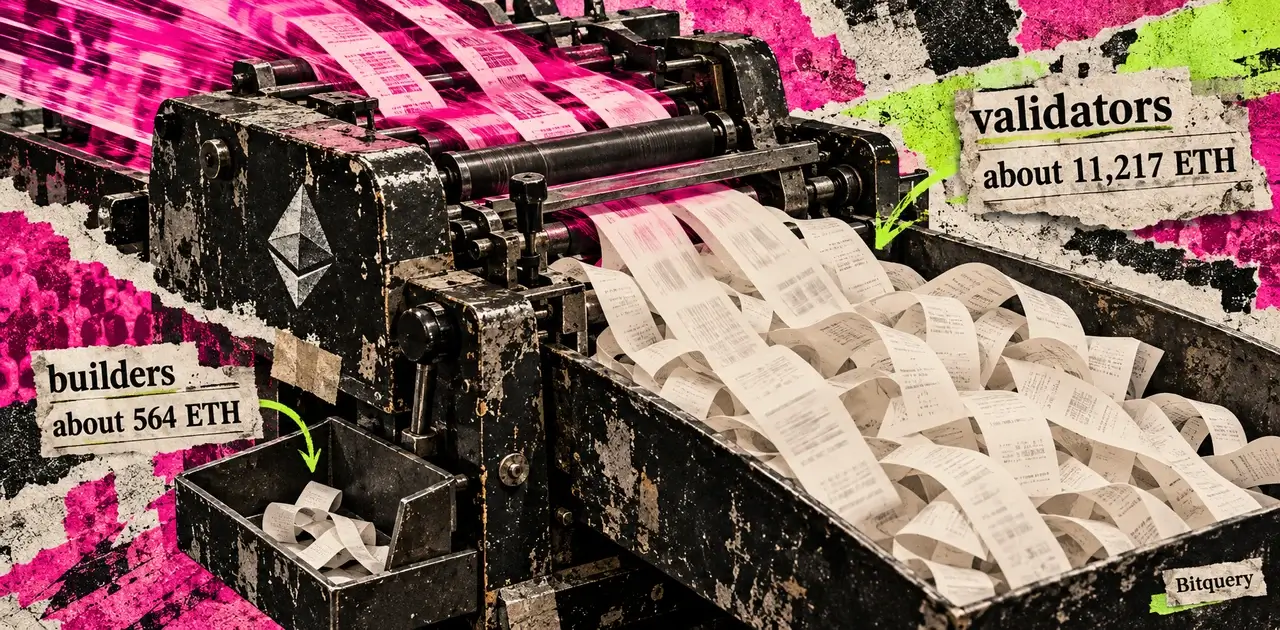
In early 2026, Ethereum validators and block builders secured a massive $30 million windfall after hackers linked to a previous Binance exploit attempted to swap stolen assets through decentralized protocols under extreme pressure. According to analysis from Bitquery, approximately 11,217 ETH reached proposing validators, while block builders retained an additional 564 ETH over a chaotic four-and-a-half-hour window. The hackers’ failure to manage slippage effectively allowed MEV (Maximal Extractable Value) bots to capture the price discrepancies, essentially redistributing a significant portion of the $119 million in 'lost' hacker funds to network participants.
The incident occurred as the exploiters attempted to liquidate assets rapidly across various liquidity pools, likely in an effort to move funds before further blacklisting or protocol-level interventions could take place. By setting loose transaction parameters in their haste, the hackers created lucrative 'sandwich' and arbitrage opportunities. These opportunities were instantly optimized by sophisticated MEV bots that tipped validators to ensure their transactions were included in the blocks, resulting in one of the largest single-day validator revenue spikes recorded in 2026.
From a regulatory and geopolitical perspective, this event underscores the complex nature of on-chain 'justice' and the role of US-based validators. While these participants are technically profiting from the liquidation of stolen assets, the automated, non-custodial nature of Ethereum’s consensus layer makes it difficult to assign culpability. US regulators, including the SEC, have previously scrutinized MEV as a form of market manipulation, but this specific case demonstrates how the technology can act as a de facto 'tax' on criminal actors, making it prohibitively expensive to move large volumes of stolen crypto.
Market observers should watch for renewed calls for 'MEV-burn' mechanisms in the next Ethereum upgrade. If implemented, such a protocol would have burned these thousands of ETH rather than distributing them to validators, potentially exerting massive deflationary pressure on the token supply. For now, the event serves as a stark reminder of the profitability of the Ethereum infrastructure layer during periods of on-chain distress and the continued technical shortcomings of even sophisticated hacking groups when navigating DeFi liquidity.