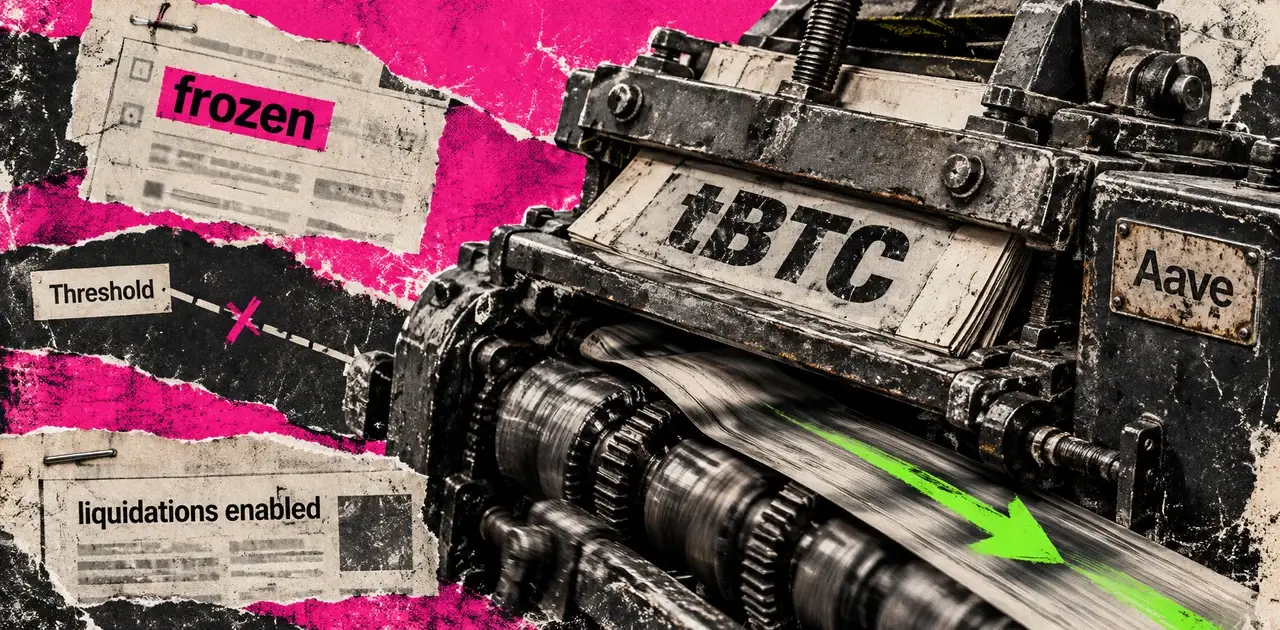
The redemption freeze on the Threshold Network means that Aave users holding or borrowing against tBTC cannot currently bridge their assets back to native Bitcoin. This disruption directly impacts approximately $136 million in total value locked (TVL) within Aave’s specialized tBTC markets. While Aave’s internal platform functions remain operational—allowing users to manage their risk by adding other collateral types or repaying loans—the primary exit liquidity to the Bitcoin mainnet is severed until Threshold resumes its redemption services.
The situation began when Threshold paused its cross-chain bridge, a security measure often employed during protocol upgrades or detected vulnerabilities in the 2026 DeFi ecosystem. However, for Aave, this creates a 'siloed' asset problem. Because tBTC is intended to maintain a 1:1 peg with Bitcoin, any prolonged inability to redeem can lead to price discrepancies on secondary markets like Uniswap or Curve. If tBTC begins to trade at a discount due to the freeze, it could trigger automated liquidations for borrowers who used the asset as collateral, even if the price of native Bitcoin remains stable.
From a regulatory and market perspective, this incident highlights the persistent 'bridge risk' that continues to shadow the DeFi sector in 2026. US-focused platforms and institutional participants are increasingly sensitive to these bottlenecks, as they complicate compliance and risk management mandates. The freeze serves as a critical test for Aave’s risk parameters; the decentralized autonomous organization (DAO) may be forced to adjust Loan-to-Value (LTV) ratios or freeze further borrowing of tBTC to prevent the accumulation of bad debt if the bridge remains offline.
Investors and DeFi participants should closely monitor the Threshold Network’s official communications regarding the restoration of the 'Catalyst' bridge route. Additionally, watch for Aave Governance Proposals (AIPs) that may seek to mitigate contagion by altering how tBTC is treated as a collateral asset. Until redemptions are restored, the $136 million in the tBTC market remains high-risk, and a shift in liquidity toward more transparent or natively-issued Bitcoin derivatives on Layer 2 networks is expected.