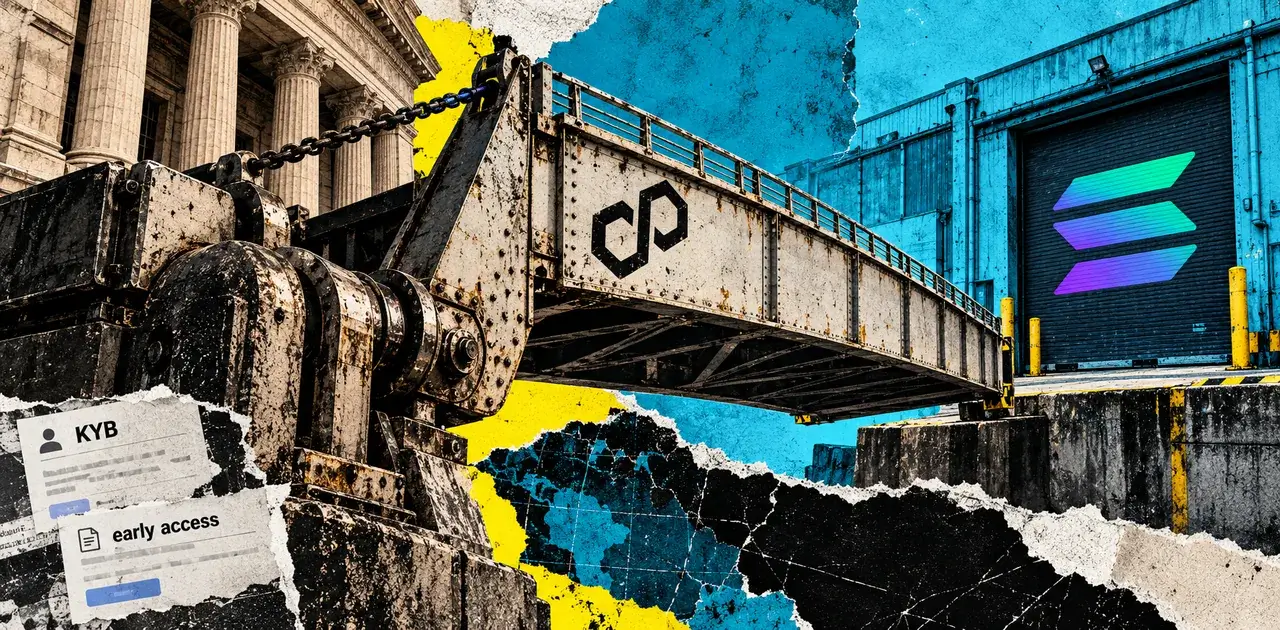
Polygon has expanded its Open Market Solution (OMS) to enable eligible international businesses to connect Solana-based stablecoins directly to US banking rails. Following a rigorous verification process, businesses in approved jurisdictions can now off-ramp liquidity from Solana’s $15 billion stablecoin ecosystem into the US financial system. This move effectively positions Polygon as a vital interoperability layer, facilitating seamless value transfers between one of the fastest blockchain networks and the world’s primary reserve currency infrastructure.
The expansion comes as part of an early-access rollout, emphasizing strict compliance and jurisdictional limits to navigate the complex global regulatory environment of 2026. By utilizing Polygon’s infrastructure to bridge Solana assets, the initiative addresses a long-standing friction point for enterprises: the difficulty of moving high-velocity digital assets into traditional corporate bank accounts without significant slippage or regulatory uncertainty. Businesses must undergo comprehensive KYC and AML checks before accessing these banking rails.
From a regulatory perspective, this development highlights the growing trend of “compliant DeFi,” where protocol developers build gated on-ramps to satisfy institutional requirements. By focusing on foreign businesses, Polygon is tapping into the massive demand for US dollar-pegged liquidity in emerging markets and international trade hubs, while maintaining a buffer from the more restrictive US domestic retail crypto regulations that have characterized the early part of 2026.
Market participants should watch for the expansion of this service to additional jurisdictions and the potential integration of more stablecoin issuers. If the early-access phase proves successful, it could significantly increase the utility and demand for both Solana (SOL) as a liquidity layer and Polygon (POL) as a settlement and connectivity layer. Furthermore, it sets a precedent for how Layer-2 solutions can provide institutional-grade services to Layer-1 ecosystems, potentially sparking a new wave of cross-chain banking integrations.