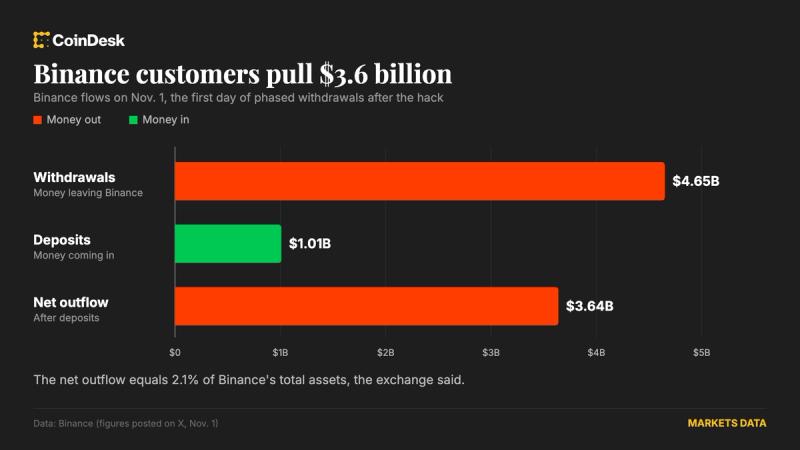
Bitcoin fell to approximately $77,900 in early 2026 trading as Binance users withdrew a net $3.64 billion in assets immediately following a period of reopened withdrawals. This sudden surge in liquidity leaving the world's largest exchange, combined with significant outflows from US-based spot Bitcoin ETFs, created an immediate supply-demand imbalance that stalled Bitcoin’s recent price momentum. The 0.4% decline reflects a market reacting to high-volume movements rather than a fundamental shift in blockchain utility.
The reopening of Binance withdrawals appears to have triggered a backlog of sell orders or transfers to self-custody, suggesting that retail and whale investors alike were waiting for a window to reposition their assets. Net outflows of this magnitude often signal short-term volatility, as the movement of $3.64 billion out of an exchange environment typically precedes a period of price consolidation or cautious trading while the market absorbs the shift in available liquidity.
Institutional sentiment also showed signs of exhaustion, with Bitcoin ETFs shedding $643 million. This suggests that the professional sector is currently de-risking, perhaps in response to the broader uncertainty surrounding exchange stability or shifting macroeconomic indicators in the early months of 2026. For US-focused investors, this dual pressure from both the largest global exchange and regulated domestic products highlights a rare alignment of retail and institutional selling pressure.
Moving forward, traders should monitor the $77,000 support level to see if the market can stabilize after this liquidity event. The key metrics to watch will be the next three days of ETF flow data and whether Binance's net flows return to a neutral or positive state. If outflows persist, it may indicate a deeper lack of confidence in centralized platforms, potentially driving further interest toward decentralized finance alternatives or cold storage.