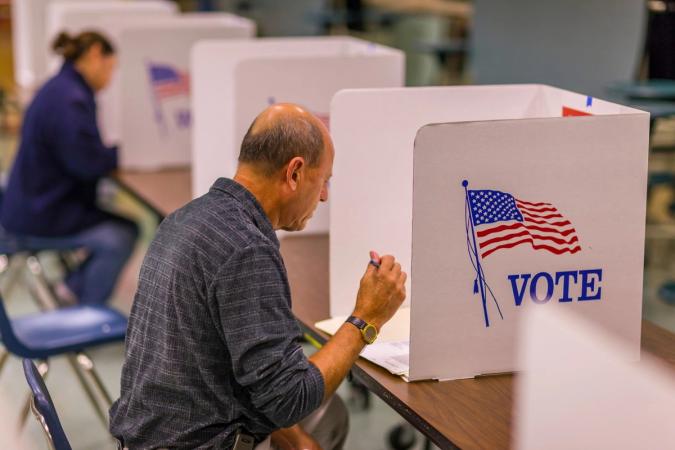
The "midterm bump" in Bitcoin’s volatility curve is directly linked to market anticipation of the US midterm elections scheduled for November 3, 2026. Options traders are currently paying a premium for contracts expiring in early November, reflecting a high level of uncertainty regarding which political party will secure the House and Senate. This volatility surge suggests the market expects the election results to serve as a decisive catalyst for the crypto industry's regulatory trajectory over the next two years.
Data from major derivatives exchanges indicates a sharp rise in implied volatility (IV) for the first week of November, creating a visible "kink" in the term structure that deviates from the flatter summer months. This phenomenon occurs as market participants prepare for multiple scenarios, ranging from a pro-crypto legislative sweep to a more restrictive regulatory environment. This is the first midterm cycle where crypto-focused political action committees have deployed record-breaking capital, heightening the market's sensitivity to specific race outcomes.
The political stakes are particularly high regarding the leadership of the Senate Banking Committee and the House Financial Services Committee. Investors are watching to see if a bipartisan pro-innovation majority emerges, which could accelerate the passage of long-delayed stablecoin frameworks and clarify the SEC's jurisdiction over secondary markets. Conversely, a shift toward more skeptical leadership could signal a continuation of the "regulation by enforcement" era that has characterized much of the 2020s.
For retail and institutional investors, this volatility bump implies that price action may remain choppy and range-bound until the polls close. Liquidity is expected to tighten in the 24 hours preceding election night as market makers adjust their risk profiles. Beyond the immediate price impact, readers should monitor the post-election "volatility crush," where a sharp drop in IV often follows the resolution of a major event, potentially providing a clearer directional trend for Bitcoin heading into the 2026 holiday season.