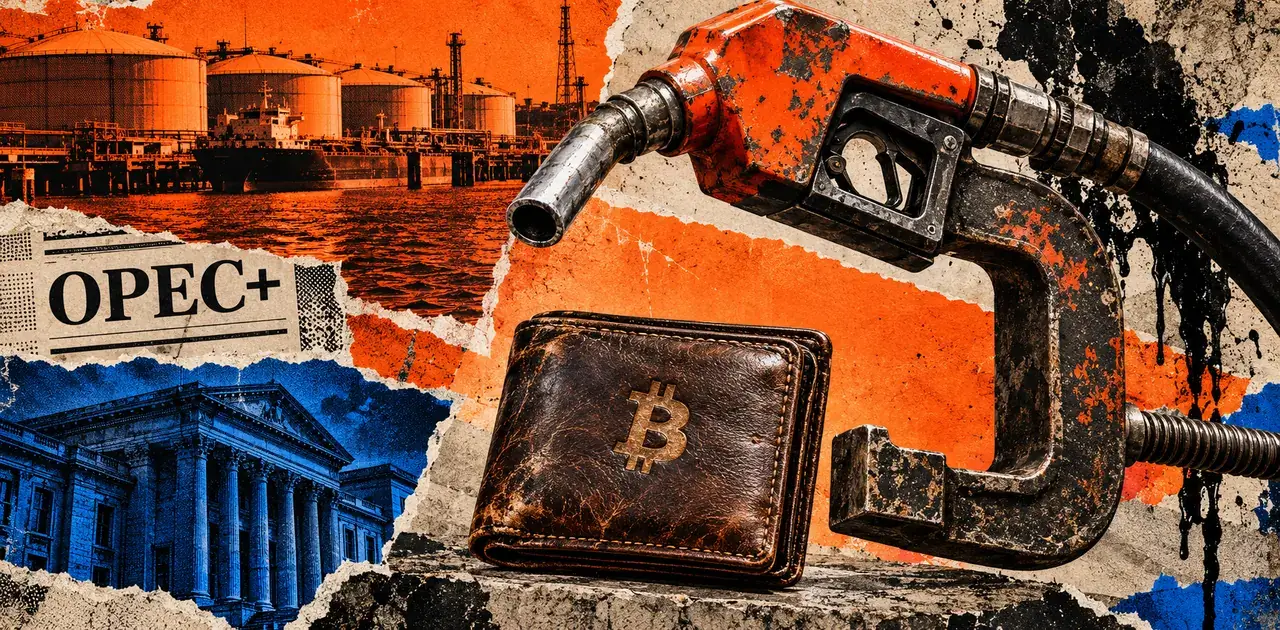
Persistent oil production constraints from OPEC+ are directly threatening Bitcoin’s price recovery in late 2026 by fueling renewed inflationary pressure. Because gasoline prices were the primary driver of the higher-than-expected September 2026 CPI report, the Federal Reserve is now expected to pause or delay its scheduled cycle of interest rate cuts. This delay keeps the cost of capital high, effectively stifling the 'financing relief' and market liquidity that typically drive Bitcoin toward new all-time highs.
The current friction stems from OPEC+ maintaining tight supply targets despite a cooling global economy, a geopolitical move that has kept energy prices volatile throughout the year. For the U.S. economy, this translates to 'sticky' inflation that complicates the Federal Reserve’s mandate. As long as energy costs remain elevated, the Fed is unlikely to pivot toward the aggressive monetary easing that crypto investors have been anticipating for the fourth quarter of 2026.
From a market perspective, Bitcoin remains highly sensitive to global liquidity cycles and the U.S. Dollar Index (DXY). When energy-driven inflation forces a hawkish Fed stance, the dollar strengthens, putting downward pressure on BTC. Furthermore, high energy costs reduce discretionary income for retail investors, while institutional funds remain hesitant to rotate into risk-on assets like crypto when risk-free yields on Treasury bonds remain high due to elevated interest rates.
Moving forward, investors should closely monitor the upcoming November 2026 FOMC meeting and any shifts in OPEC+ production rhetoric. A stabilization in oil prices below key resistance levels could reopen the door for a December rate cut, providing a potential year-end catalyst for Bitcoin. Conversely, if energy constraints persist, Bitcoin will likely continue its sideways consolidation as the market adjusts to a 'higher-for-longer' interest rate environment.