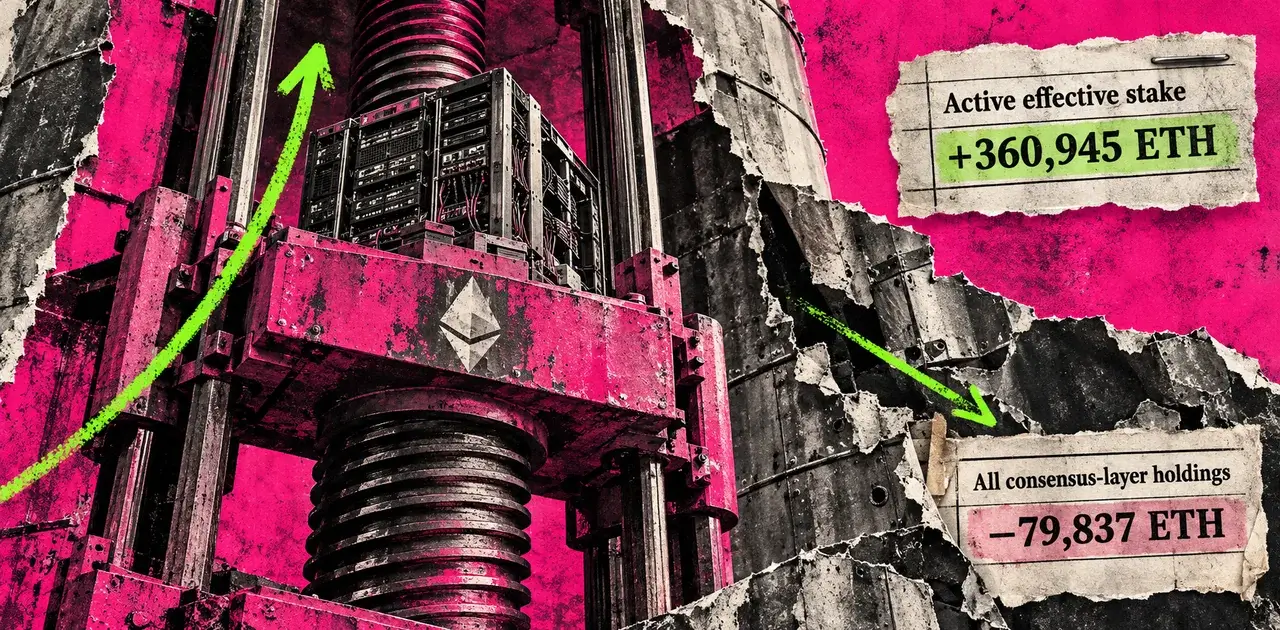
Ethereum’s active stake increased by 361,000 ETH during October 2026 because a wave of pending validators finally cleared the entry queue, despite a net decline in the total amount of ETH locked in the consensus layer. This divergence suggests that while large-scale holders or 'whales' are withdrawing capital—likely for liquidity or rebalancing—the network is successfully onboarding new participants to maintain its operational security. This internal rotation ensures that the number of active nodes remains high even if the total capital cushion sees a temporary retreat.
Data from the October 1–30 period reveals that the broader consensus balance shrank as unstaking requests outpaced new deposits. Market analysts suggest this is a byproduct of the 'Post-Shanghai Maturity' phase of 2026, where institutional investors are more aggressively moving ETH between direct staking and high-yield liquid staking derivatives. The fact that active stake rose implies that the validator entry queue was sufficiently backlogged to absorb the impact of these exits, preventing a drop in network participation.
From a regulatory perspective, this movement aligns with the 2026 SEC guidelines regarding 'Staking-as-a-Service' transparency. US-based platforms have been forced to adjust their validator management to comply with real-time reporting of active vs. inactive assets. As a result, we are seeing a more 'surgical' approach to staking where capital is moved frequently to optimize tax efficiency and yield, leading to the fluctuations in total balance observed this month.
For investors, the key metric to watch is the validator exit queue. If the total consensus balance continues to shrink while the entry queue flattens, it could signal a long-term shift in Ethereum’s security budget. However, as long as active stake continues to grow or remain stable, the network’s ability to process transactions and resist censorship remains uncompromised. Readers should monitor whether this 361,000 ETH activation trend persists into November or if the shrinking total balance eventually forces a contraction in active validators.