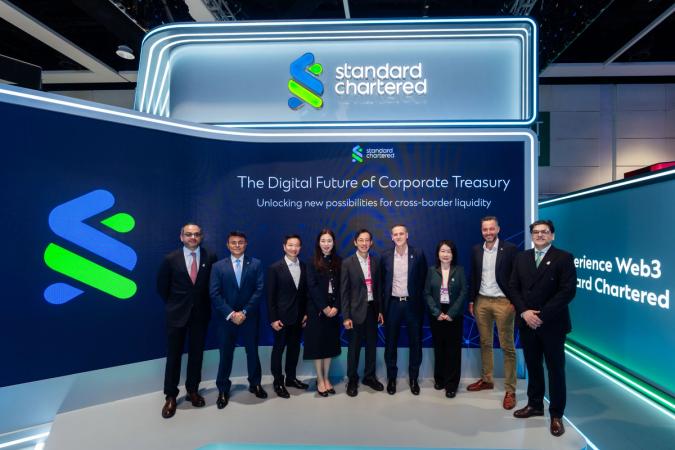
Standard Chartered’s debut of tokenized deposits via the EnsembleTX system allows corporate clients to move funds between participating banks instantly and around the clock. By settling transactions in central bank digital money, the bank effectively eliminates traditional banking hour constraints, providing a blueprint for how high-value institutional liquidity will be managed throughout 2026. This move transitions tokenization from a pilot phase into a functional tool for corporate treasury management.
The initiative leverages Hong Kong’s Project Ensemble, a wholesale central bank digital currency (wCBDC) sandbox that has matured into a production-ready environment as of early 2026. Standard Chartered is utilizing this infrastructure to enable interoperability between different bank ledgers, ensuring that tokenized commercial bank money can be exchanged seamlessly for central bank assets. This ensures that even large-scale corporate transfers maintain the highest level of settlement finality and security without the need for manual reconciliation.
For US-based observers and investors, this development underscores Hong Kong's aggressive lead in the Real World Asset (RWA) space. While the US regulatory environment remains cautious regarding a domestic retail CBDC, the Hong Kong Monetary Authority (HKMA) has successfully fostered a framework that encourages private banks to build on top of state-backed digital infrastructure. This geopolitical advantage is likely to attract more multinational treasuries to consolidate their digital asset operations in the Asia-Pacific region to benefit from superior capital efficiency.
Market participants should view this as a significant catalyst for the broader RWA sector and institutional DeFi adoption. As more banks join the EnsembleTX network, the demand for interoperability protocols and private blockchain infrastructure will likely increase. Readers should watch for announcements from other global banking giants like HSBC or Citi regarding similar expansions, as well as any potential policy responses from the Federal Reserve to prevent liquidity flight toward more advanced digital jurisdictions.