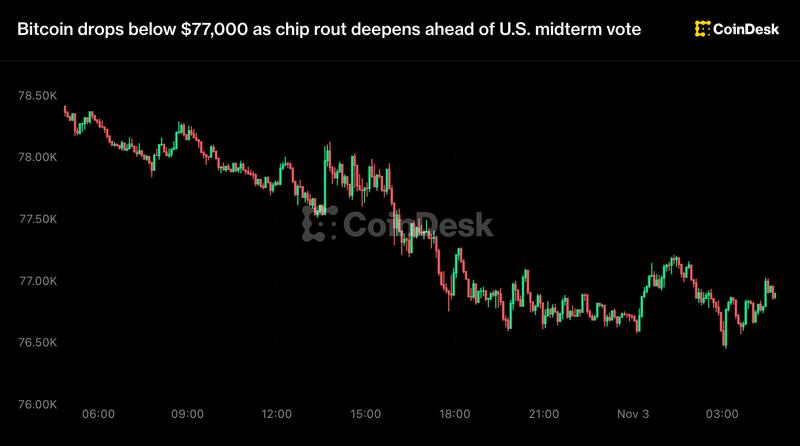
Bitcoin's recent slide below $77,000 is a direct result of a 'risk-off' rotation triggered by a sharp correction in the Nasdaq 100, specifically fueled by a rout in semiconductor stocks. As tech-heavy indices face downward pressure, highly correlated digital assets are being sold off by investors seeking liquidity. This market cooling is being further compounded by the proximity of the 2026 U.S. midterm elections, which traditionally introduces a period of heightened volatility and cautious trading as the market weighs potential shifts in fiscal and regulatory policy.
The impact of this tech-led decline has extended beyond Bitcoin to the broader altcoin market. Zcash (ZEC) experienced a sharp decline of nearly 10%, while Binance Coin (BNB) struggled to maintain its valuation, slipping below the psychological $700 support level. The sell-off in Asian markets, following the lead of the U.S. chip sector, suggests a global deleveraging event is underway, affecting traders across multiple time zones and asset classes.
From a geopolitical and political standpoint, the 2026 midterm elections are a critical focal point for the crypto industry. With the future of digital asset market structure bills and stablecoin regulation potentially hanging on the balance of power in Washington, institutional investors are increasingly de-risking to avoid exposure to post-election policy pivots. The intersection of semiconductor supply chain concerns and election-year rhetoric has created a perfect storm for near-term price suppression.
Looking ahead, market participants should closely monitor the Nasdaq 100's ability to find a bottom, as a continued slide in tech stocks will likely drag Bitcoin toward deeper support levels. Additionally, any election-related polling that hints at a crypto-friendly or crypto-hostile legislative shift could provide the next major catalyst. For now, the $77,000 mark remains a key resistance level that Bitcoin must reclaim to invalidate the current bearish momentum.