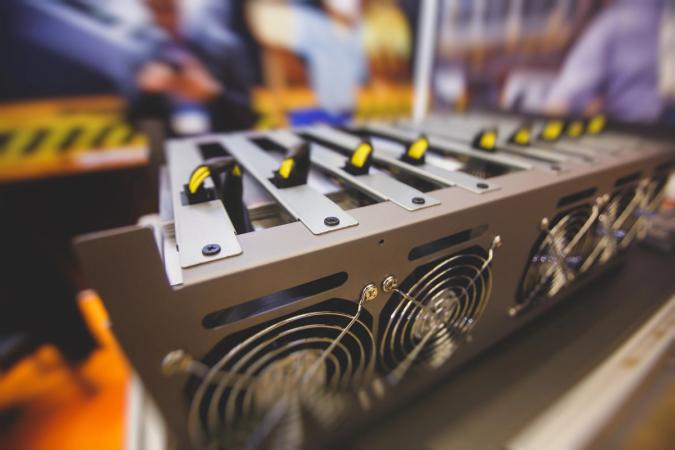
Cipher Mining successfully reported a $31 million net profit for the third quarter of 2026, a figure achieved primarily through a significant $127 million accounting gain that transformed a potential operating loss into a win for shareholders. The company’s core revenue saw a sharp 63% decline compared to the previous year, reflecting the intensified competition and reduced block rewards currently defining the post-halving Bitcoin mining landscape. This pivot to AI-focused infrastructure is designed to stabilize the company's balance sheet against the inherent volatility of the crypto market.
The massive drop in revenue underscores the ongoing struggle for US-based miners who remain solely dependent on Bitcoin rewards. As network difficulty reaches record highs in late 2026, the cost of production has forced several mid-tier miners to consolidate or exit. Cipher’s ability to leverage its energy contracts for AI and HPC workloads represents a growing trend where mining firms are rebranded as data center powerhouses to attract institutional capital that is wary of pure-play crypto exposure.
From a regulatory and political standpoint, this shift aligns with the U.S. government’s push to secure domestic AI supremacy. By repurposing Bitcoin mining sites for artificial intelligence processing, companies like Cipher are finding it easier to navigate local energy grid requirements and environmental scrutiny. This transition is seen as a survival necessity, as purely mining Bitcoin has become increasingly capital-intensive with thinner margins throughout the 2026 fiscal year.
Investors and market analysts should watch for whether these accounting gains can be sustained by actual operational revenue from AI clients in the fourth quarter. While the headline profit number is bullish for Cipher’s stock (CIFR), it serves as a cautionary tale for the mining sector at large: without diversification into AI or secondary energy services, traditional mining operations face a precarious future. The market will likely reward miners who can prove they have successfully transitioned their hardware and power capacity to serve the booming demand for LLM training and inference.