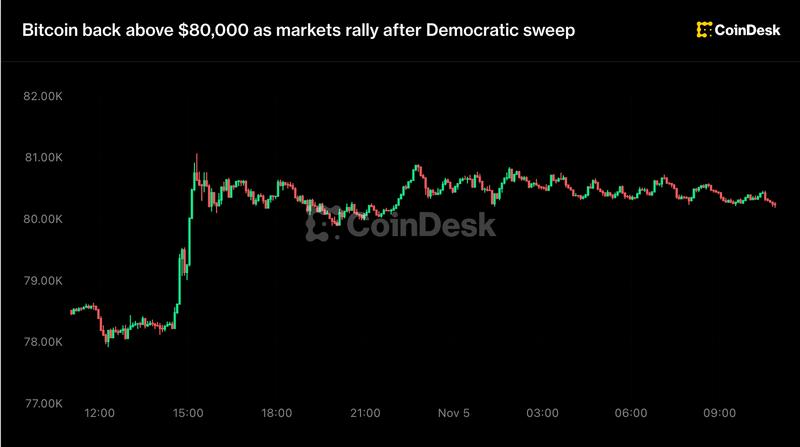
Bitcoin is currently maintaining a steady position at the $80,000 threshold and Ether has rallied 4% because the 2026 Democratic election sweep provided the market with long-awaited political clarity. As Wall Street indices turned higher, investors rotated capital into digital assets, viewing the election outcome as a signal for stable fiscal policy. The rally was further bolstered by a significant 9% decline in Brent crude oil prices, which alleviated immediate inflation concerns and increased the appeal of risk-on assets like cryptocurrencies.
Institutional participation has seen a notable uptick, with spot crypto ETFs drawing fresh inflows as the election results were finalized. The market's ability to hold the $80,000 level for Bitcoin suggests a strong psychological floor, while Ether’s outperformance indicates a growing appetite for smart-contract platforms under the new legislative outlook. Traders are interpreting the Democratic victory as a path toward continued infrastructure investment, which historically correlates with increased liquidity in the tech and digital asset sectors.
Geopolitical factors played a supporting role in this market movement. The crash in energy prices—specifically the nearly 9% drop in Brent crude—has reduced operational costs for large-scale Bitcoin mining operations and provided a macroeconomic tailwind for the broader US economy. This environment has allowed Wall Street to move higher, dragging the crypto market along with it as the correlation between the S&P 500 and major digital assets remains tight in early 2026.
Moving forward, investors should closely watch for new legislative proposals regarding the regulation of decentralized finance and the potential for an expanded suite of altcoin ETFs. The focus will now shift to the Federal Reserve’s reaction to falling energy prices and whether the Democratic-led Congress will prioritize the long-awaited comprehensive crypto market structure bill. If Bitcoin can break above the $82,000 resistance, it could signal a sustained bull run through the second half of the year.