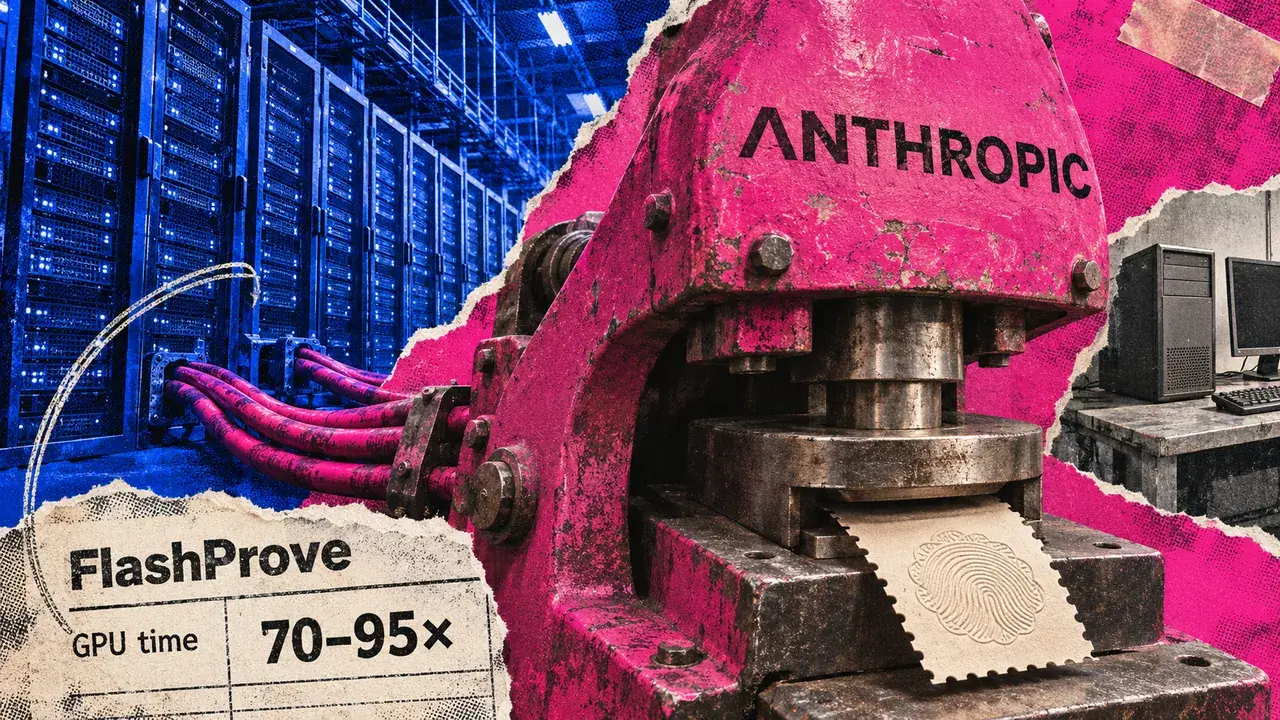
Anthropic’s FlashProve tool verifies that a user is receiving results from a specific AI model, yet it comes with a 'costly catch': the verification process demands 70 to 95 times the GPU resources of an ordinary inference task. This tool is designed to solve the problem of 'model spoofing,' where a provider might claim to run a high-end model like Claude 3.5 but actually serves output from a cheaper, less capable alternative. While FlashProve provides the necessary mathematical proof of computation, the current hardware requirements make it economically unfeasible for most high-volume, real-time applications in early 2026.
The development of FlashProve is a response to growing concerns within the U.S. technology sector regarding AI transparency and accountability. As decentralized AI networks grow, the need for 'Proof of Inference' has become a central technical challenge. Anthropic's approach offers a gold standard for trust, but the extreme compute penalty highlights the gap between theoretical model verification and practical market scalability. This development puts pressure on decentralized infrastructure providers to optimize their hardware stacks to handle such massive overhead.
From a regulatory perspective, the U.S. Department of Commerce has been monitoring AI verification methods as part of its ongoing safety and transparency frameworks. If verification becomes a legal requirement for sensitive sectors like healthcare or finance, the high cost of tools like FlashProve could lead to a bifurcated AI market. Large enterprises may be able to absorb the 95x GPU premium for compliance, while smaller startups and decentralized protocols may be priced out unless secondary optimization layers are developed.
For the crypto and Web3 markets, this news is a double-edged sword. It validates the core mission of projects focusing on decentralized AI compute, as it proves that even centralized giants like Anthropic recognize the need for verifiable inference. However, it also sets a high bar for performance. Investors and developers should watch for the release of zero-knowledge (ZK) proof optimizations or specialized ASIC hardware designed to reduce the FlashProve overhead. Until the cost of verification drops significantly, widespread adoption of verifiable AI on-chain remains a mid-to-long-term prospect.